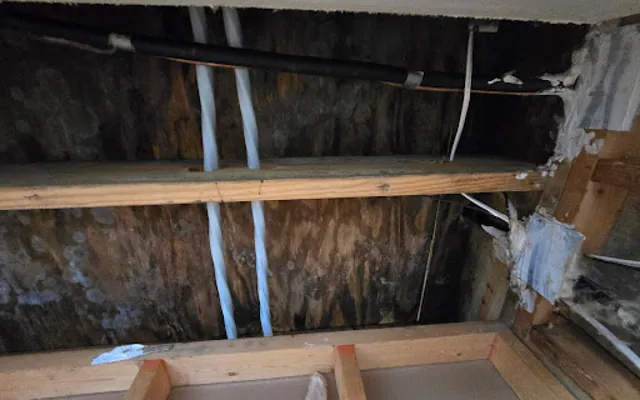
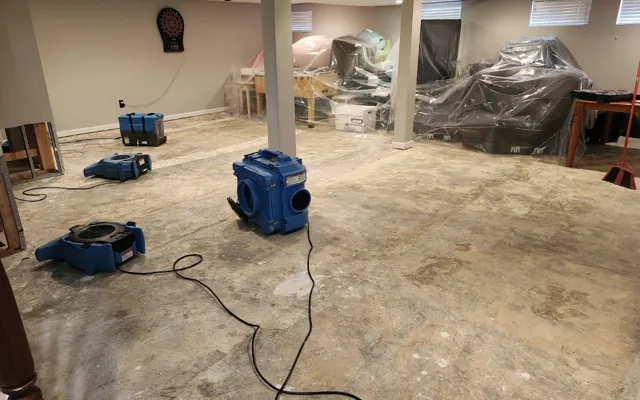
When ice dams or old plumbing leak into a Washington Park, CO attic, local crews respond around the clock. They follow IICRC-standard methods to dry the space and protect the historic home's structure.

Technicians first confirm the intrusion source in the Washington Park attic, whether from an ice dam, a cracked pipe in an exterior wall, or storm damage. They map how far the water traveled across the decking and into insulation.
All wet insulation is removed and bagged for disposal. In these older homes, insulation cannot be dried effectively and will hold moisture against the wooden roof decking, risking mold and structural rot if left in place.
High-powered air movers and dehumidifiers dry the attic's decking and framing. The crew takes moisture readings to confirm the space meets drying targets, checking for any soft wood that may need a roofer's attention later.

Attic water damage cleanup in Washington Park typically runs from about $900 to $4,000, depending on how much insulation has to be removed and how far the moisture spread into the decking, framing, and ceiling below before it was found. A contained intrusion caught soon after a storm sits on the low end, while a slow leak that soaked insulation across a large section of attic and stained a ceiling below sits on the high end. Sudden storm or ice-dam related attic damage is commonly covered under a homeowner policy, and the loss is documented, including photos of the source, for the claim.
In Washington Park, the signature Denver Squares and bungalows often have full basements and century-old plumbing. These cast-iron and galvanized lines, along with hard winter freezes, are a common source of leaks that can travel up into the attic, damaging insulation and saturating roof decking. Washington Park's historic homes have aging, exposed plumbing prone to splitting in Colorado's hard freezes. Ice dams from heavy snowmelt and storm-driven rain also push water under roof shingles, leading to attic intrusions in this mile-high, semi-arid climate. From Washington Park, crews also cover nearby Sunnyside, West Highland, South Park Hill, Cherry Creek, Globeville, Villa Park. See every neighborhood and town on the full service area page.
See all areas servedEvery loss is photographed, measured, and logged from the first visit, so the paperwork holds up with the insurance carrier.
Technicians follow recognized IICRC drying standards and prove it with daily moisture readings on Washington Park homes, not guesswork.
Emergency dispatch any hour of the day or night, with a real crew on the way across the metro, not a callback in the morning.
A real crew dispatched any hour, not a callback in the morning.
Trained technicians following recognized IICRC drying standards.
Truck-mounted, portable, and submersible for any size loss.
The loss is documented and billed to the carrier directly.
Costs in the Denver area typically range from about $900 to $4,000. A smaller, recent leak from a storm is on the lower end. A slow leak that soaked insulation across a large area and stained ceilings below will be higher, due to more labor and drying time.
Yes, sudden damage from storms or ice dams is commonly covered. Local crews document the source and full extent of the loss with photos and moisture logs, which are essential for filing a successful claim with the homeowner's insurance provider.
Crews are on call 24 hours a day and can be on the way to Washington Park within the hour.
Call (720) 807-8315