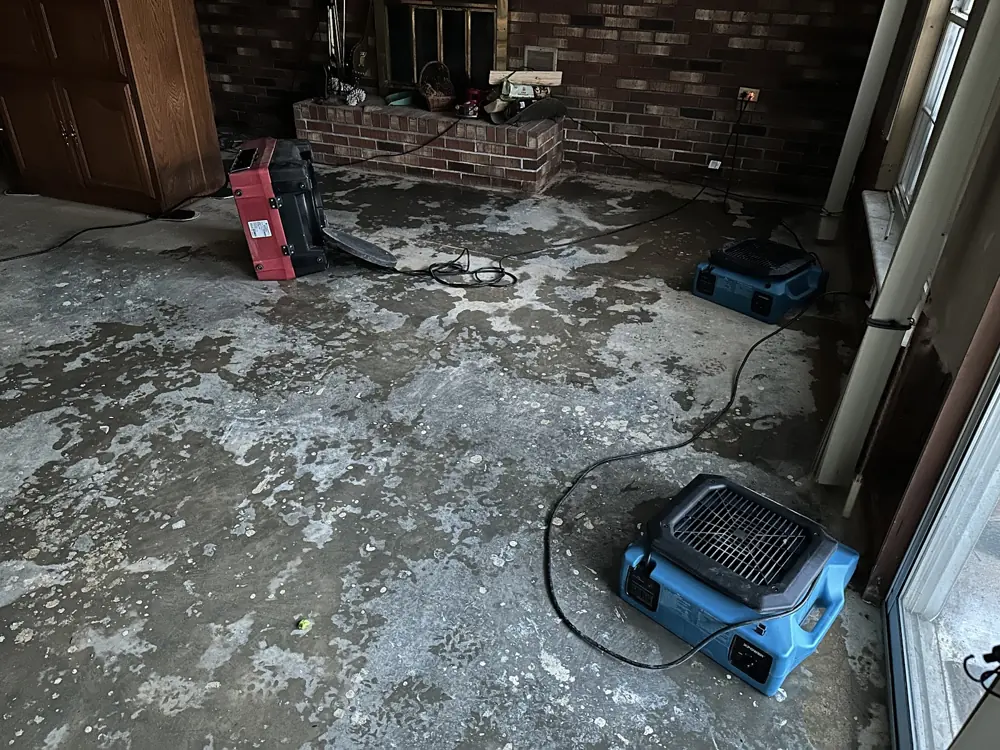
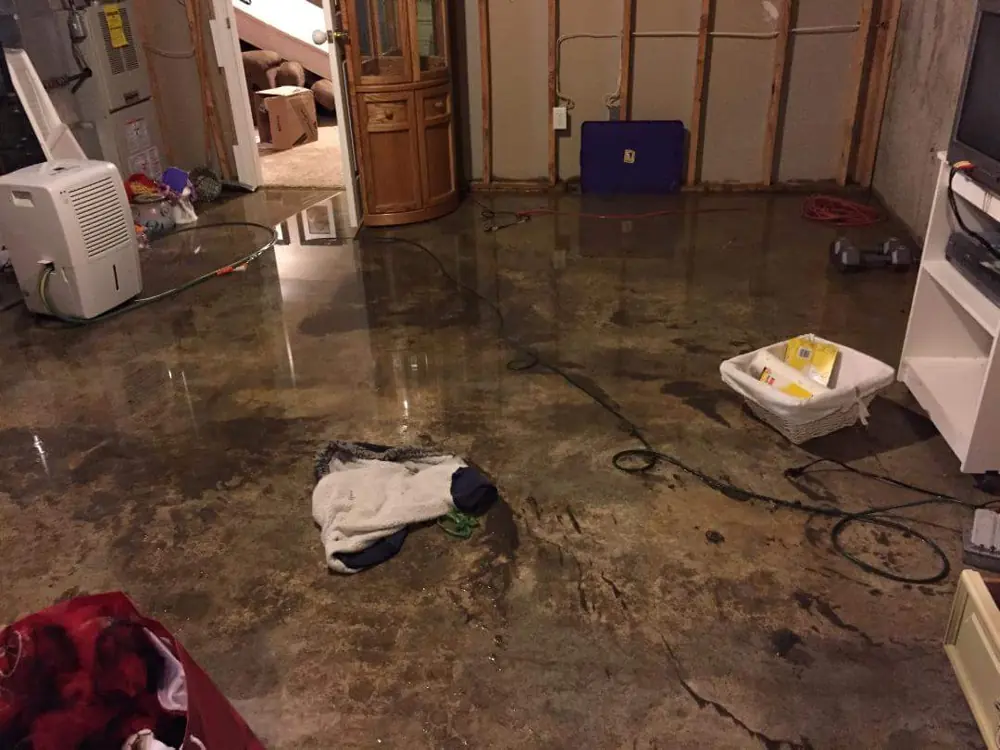
Between snowmelt tracked in off the driveway, a sudden summer downpour finding its way under the door, and a garage-side water heater or laundry hookup letting go, Denver garages take on water more than most people expect. Crews respond 24/7 to extract it and dry the slab and any stored belongings.

A crew arrives in about an hour, confirms whether the source is weather-driven or mechanical, and checks whether stored items are at risk.
Water is extracted from the slab and, if the garage has drywall or finished walls, checked along the base of those surfaces too.
Salvageable stored items are moved off the wet slab so drying can proceed and further damage is avoided.
Air movers and, where the garage is finished, dehumidifiers dry the slab and any affected drywall to a moisture-verified target.

While help is on the way, these first steps, done only where it is safe, limit the damage and protect the insurance claim.
Shut the supply off at the source, or close the home's main valve if the source is not obvious. Stopping the flow limits the damage more than anything else.
Switch off electricity to the affected area, but only if the breaker can be reached without standing in or touching the water.
Get a crew dispatched right away. The sooner extraction and drying begin, the more flooring, drywall, and belongings can be saved.
Take photos and a short video of the water and the affected rooms before anything is moved, so the insurance claim starts strong.
Garage water damage cleanup in Denver typically runs from about $300 to $1,800, depending on whether the garage is finished with drywall, how much stored property was affected, and whether the source was weather-driven or a mechanical failure like a water heater. A bare-slab garage with a quick snowmelt intrusion sits on the low end, while a finished garage with a water heater failure that soaked drywall and stored belongings sits on the high end. Coverage depends on the source and the specific policy, and the loss, including any damaged stored items, is documented for the claim.
Crews reach Denver and the nearby metro fast, from Capitol Hill, Five Points, and Highland to Wheat Ridge, Lakewood, Englewood, and Arvada. See the full list on the areas served across Denver page.
See all areas servedEvery loss is photographed, measured, and logged from the first visit, so the paperwork holds up with the insurance carrier.
Technicians follow recognized IICRC drying standards and prove it with daily moisture readings on Denver homes, not guesswork.
Emergency dispatch any hour of the day or night, with a real crew on the way across the metro, not a callback in the morning.
A real crew dispatched any hour, not a callback in the morning.
Trained technicians following recognized IICRC drying standards.
Truck-mounted, portable, and submersible for any size loss.
The loss is documented and billed to the carrier directly.
Snowmelt and slush tracked in off a driveway, especially with a slab-edge gap or poor grading, is one of the most common quiet sources, along with mechanical failures from a garage-side water heater or laundry hookup.
It depends on the policy and the cause. Sudden mechanical failures, like a water heater letting go, are more likely to have coverage for both the structure and stored property than gradual seepage from snowmelt or minor grading issues.
A bare slab dries faster and simpler since there is no drywall or insulation to worry about, though stored belongings and any wood shelving still need to be checked and dried.
Keeping the slab-to-wall seam and door threshold sealed, and making sure the driveway grades water away from the garage rather than toward it, are the two biggest factors in keeping snowmelt out.
Yes. The pattern of the water, where it is deepest and how it is distributed across the slab, along with checking any garage-side plumbing or the water heater, usually makes the source clear before extraction even finishes.
Denver crews are on call 24 hours a day, local and fast, and can be on the way within the hour.
Call (720) 807-8315