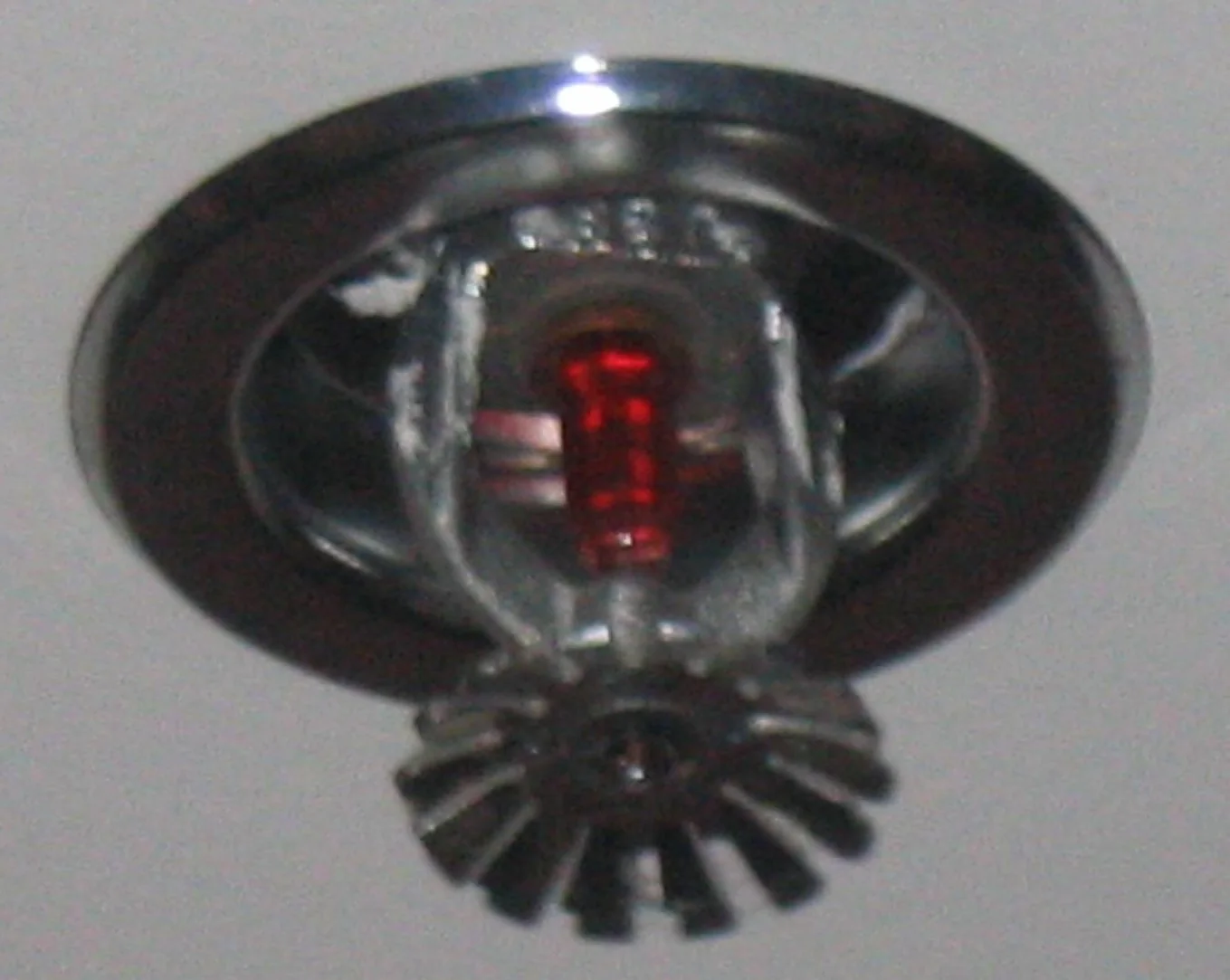
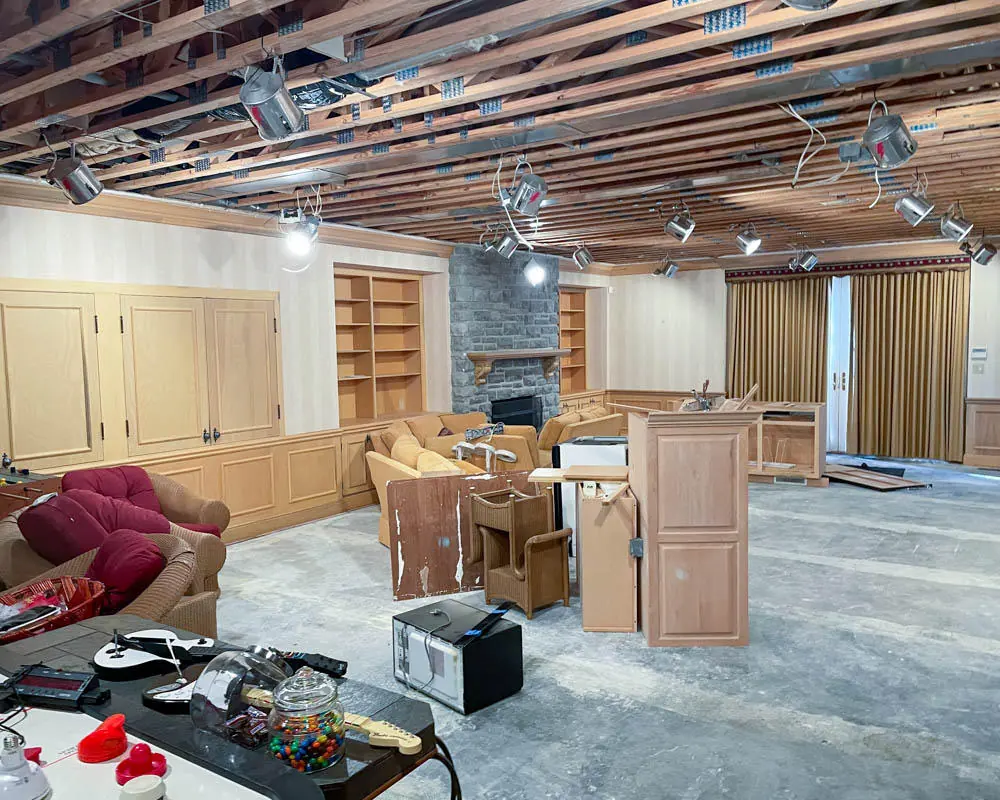
A single fire sprinkler head can release far more water in a few minutes than most homes ever see from a plumbing failure, especially in a frozen or accidentally triggered head. Denver crews respond 24/7 to extract high-volume discharge water and dry multi-level spaces fast.

A crew arrives in about an hour and assesses how many units or floors the discharge affected before extraction begins.
Truck-mounted and portable extraction units pull standing water fast from floors, ceilings, and any space it has pooled.
Saturated ceiling tile, drywall, and insulation are opened or removed so trapped water is not sealed behind a surface, especially where water traveled between floors.
Air movers and dehumidifiers are staged across every affected unit or room, with moisture readings tracked and logged for each area separately.

While help is on the way, these first steps, done only where it is safe, limit the damage and protect the insurance claim.
Shut the supply off at the source, or close the home's main valve if the source is not obvious. Stopping the flow limits the damage more than anything else.
Switch off electricity to the affected area, but only if the breaker can be reached without standing in or touching the water.
Get a crew dispatched right away. The sooner extraction and drying begin, the more flooring, drywall, and belongings can be saved.
Take photos and a short video of the water and the affected rooms before anything is moved, so the insurance claim starts strong.
Fire sprinkler discharge cleanup in Denver typically runs from about $2,500 to $10,000 or more, driven heavily by how many rooms, units, or floors the water reached before the system was shut off. A single room affected by a quickly stopped discharge sits on the low end, while water that traveled through ceilings into multiple condo units or office suites sits on the high end. Because sprinkler discharge often affects shared building systems, the claim may involve both the unit owner's policy and the building's, and every affected area is documented separately to support that process.
Crews reach Denver and the nearby metro fast, from Capitol Hill, Five Points, and Highland to Wheat Ridge, Lakewood, Englewood, and Arvada. See the full list on the areas served across Denver page.
See all areas servedEvery loss is photographed, measured, and logged from the first visit, so the paperwork holds up with the insurance carrier.
Technicians follow recognized IICRC drying standards and prove it with daily moisture readings on Denver homes, not guesswork.
Emergency dispatch any hour of the day or night, with a real crew on the way across the metro, not a callback in the morning.
A real crew dispatched any hour, not a callback in the morning.
Trained technicians following recognized IICRC drying standards.
Truck-mounted, portable, and submersible for any size loss.
The loss is documented and billed to the carrier directly.
Sprinkler systems are engineered to move a large volume of water quickly to suppress a fire, so even a single triggered head releases far more water per minute than a typical plumbing failure.
A frozen and cracked head in an unheated space during a hard freeze, physical damage to a head, or a system malfunction are the most common causes of a discharge with no actual fire.
Yes. Because sprinkler piping and the water it releases often move through shared ceiling assemblies, discharge in one unit or floor can show up as ceiling damage one or more levels below.
It often involves both the affected unit owner's policy and the building or association's policy, since the sprinkler system itself is typically a shared building asset. Documenting each affected area separately helps sort out that process.
As soon as the system is shut off and it is safe to enter. A sprinkler discharge moves a large volume of water fast, so getting extraction started quickly limits how far it spreads through ceilings and between units.
Denver crews are on call 24 hours a day, local and fast, and can be on the way within the hour.
Call (720) 807-8315