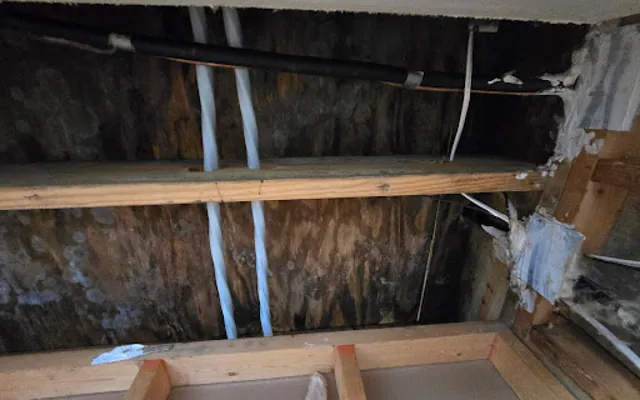
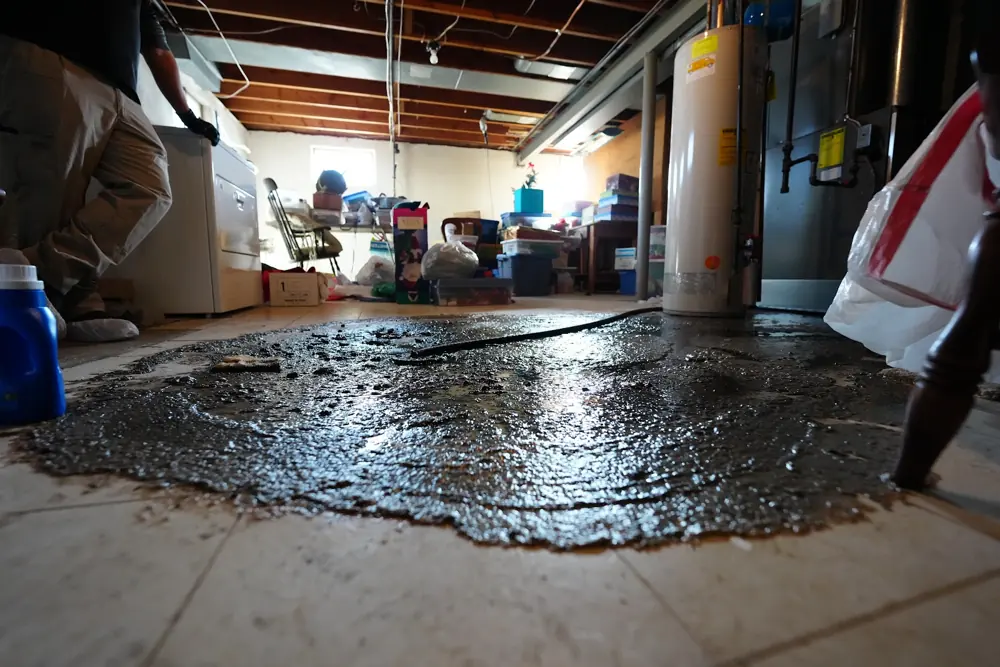
Denver sits at the base of the Front Range, where heavy upslope snowstorms can drop over a foot of snow followed by sharp freeze-thaw swings, the exact recipe that builds ice dams on the city's steep-pitched older roofs. When meltwater backs up under the shingles, crews dry out the attic, walls, and ceilings it reaches, day or night.

The crew traces where meltwater entered, checking the attic insulation, roof deck underside, exterior wall cavities, and ceilings below for hidden moisture.
Standing water is extracted, and soaked insulation, drywall, or ceiling sections that cannot dry in place are opened or removed so trapped moisture does not stay sealed behind a surface.
Air movers and dehumidifiers are staged through the affected attic space, wall cavities, and ceiling areas to dry them to a measured target.
Moisture readings confirm the structure is dry, the loss is photographed and logged for the claim, and the roof and attic conditions that likely caused the dam are noted for the homeowner.

While help is on the way, these first steps, done only where it is safe, limit the damage and protect the insurance claim.
Shut the supply off at the source, or close the home's main valve if the source is not obvious. Stopping the flow limits the damage more than anything else.
Switch off electricity to the affected area, but only if the breaker can be reached without standing in or touching the water.
Get a crew dispatched right away. The sooner extraction and drying begin, the more flooring, drywall, and belongings can be saved.
Take photos and a short video of the water and the affected rooms before anything is moved, so the insurance claim starts strong.
Ice dam water damage cleanup in Denver typically runs from about $1,200 to $5,500, depending on how far the meltwater traveled through the attic and down into wall and ceiling cavities before it was caught. A localized attic intrusion found early sits on the low end, while meltwater that ran down interior walls and stained ceilings across multiple rooms after a heavy upslope storm sits on the high end. Sudden ice-dam water intrusion is commonly covered under a homeowner policy, and the loss, along with moisture readings and photos, is documented and billed direct to the carrier where possible.
Crews reach Denver and the nearby metro fast, from Capitol Hill, Five Points, and Highland to Wheat Ridge, Lakewood, Englewood, and Arvada. See the full list on the areas served across Denver page.
See all areas servedEvery loss is photographed, measured, and logged from the first visit, so the paperwork holds up with the insurance carrier.
Technicians follow recognized IICRC drying standards and prove it with daily moisture readings on Denver homes, not guesswork.
Emergency dispatch any hour of the day or night, with a real crew on the way across the metro, not a callback in the morning.
A real crew dispatched any hour, not a callback in the morning.
Trained technicians following recognized IICRC drying standards.
Truck-mounted, portable, and submersible for any size loss.
The loss is documented and billed to the carrier directly.
It is a ridge of ice that forms at the cold edge of a roof, usually the eave, and traps meltwater running down from the warmer, snow-covered roof above it. With nowhere to drain, that trapped water backs up under the shingles and works into the attic, walls, and ceilings.
The city's Front Range location brings heavy, wet upslope snowstorms followed by sharp freeze-thaw swings, sun one day and hard freeze the next, which is close to the ideal condition for ice dams to form, particularly on the steep, complex rooflines of the city's older homes.
It carries real risk, both of damaging the shingles underneath and of a fall on an icy roof. It is safer to have the interior water damage handled by a crew and address the attic insulation, ventilation, and heat loss that caused the dam in the first place.
Heat escaping into the attic from below and uneven attic ventilation are the biggest drivers, along with shade, roof pitch, and orientation. North-facing slopes and shaded valleys where two roof planes meet are the most prone spots.
Sudden interior water damage caused by an ice dam is usually covered under a standard homeowner policy. Damage tied to a known, long-ignored leak is less likely to be covered, which is why the intrusion is documented thoroughly at the time it is found.
Denver crews are on call 24 hours a day, local and fast, and can be on the way within the hour.
Call (720) 807-8315