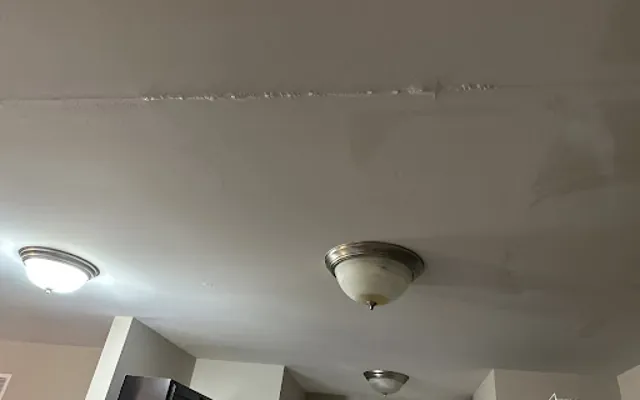
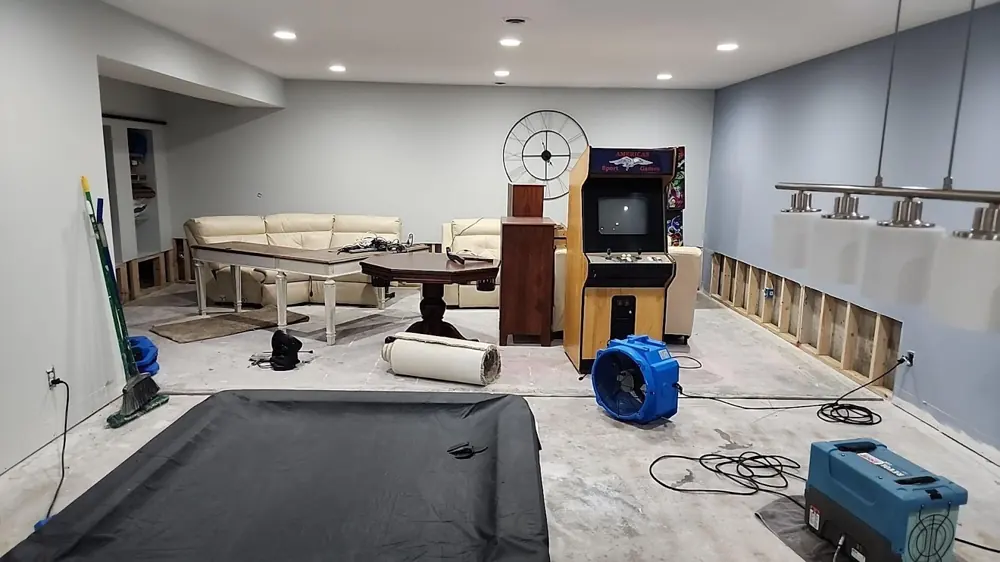
A stained or sagging ceiling in a Denver home usually means water has been collecting above it for a while. Crews respond around the clock to extract trapped water, open the cavity safely, and dry the structure before a small stain becomes a collapse.

A crew is typically on-site within about an hour to confirm the water source is stopped and assess how much weight the ceiling is carrying before anyone works underneath it.
If water is pooled above the drywall, a controlled release point relieves pressure safely, and standing water below is extracted immediately.
Compromised sections of ceiling drywall and insulation are removed to expose the joist cavity so it can dry completely instead of trapping moisture.
Air movers and dehumidifiers dry the joist bay and surrounding framing until meters confirm a dry, stable reading, with results documented for the claim.

While help is on the way, these first steps, done only where it is safe, limit the damage and protect the insurance claim.
Shut the supply off at the source, or close the home's main valve if the source is not obvious. Stopping the flow limits the damage more than anything else.
Switch off electricity to the affected area, but only if the breaker can be reached without standing in or touching the water.
Get a crew dispatched right away. The sooner extraction and drying begin, the more flooring, drywall, and belongings can be saved.
Take photos and a short video of the water and the affected rooms before anything is moved, so the insurance claim starts strong.
Ceiling water damage cleanup in Denver typically runs from about $600 to $3,500, depending on the size of the affected area, whether the drywall has to be fully removed, and how far water traveled into the joist cavity. A single small stain caught early sits toward the low end; a ceiling section that sagged or partially collapsed across a larger room sits toward the high end. Sudden water damage from a burst pipe or supply-line failure is commonly covered, and moisture readings plus photos are documented to support the claim.
Crews reach Denver and the nearby metro fast, from Capitol Hill, Five Points, and Highland to Wheat Ridge, Lakewood, Englewood, and Arvada. See the full list on the areas served across Denver page.
See all areas servedEvery loss is photographed, measured, and logged from the first visit, so the paperwork holds up with the insurance carrier.
Technicians follow recognized IICRC drying standards and prove it with daily moisture readings on Denver homes, not guesswork.
Emergency dispatch any hour of the day or night, with a real crew on the way across the metro, not a callback in the morning.
A real crew dispatched any hour, not a callback in the morning.
Trained technicians following recognized IICRC drying standards.
Truck-mounted, portable, and submersible for any size loss.
The loss is documented and billed to the carrier directly.
Drywall absorbs water and loses strength, so trapped water above a ceiling, whether from a leaking pipe, overflow, or roof leak, adds weight the drywall was never built to hold, and sagging is often the first visible warning sign.
A stain alone is usually not an immediate hazard, but a visibly sagging or bulging ceiling can be close to collapse and the area underneath should be avoided until it is assessed.
That is best left to trained hands. A controlled release point relieves pressure safely and limits the mess, while a random puncture can make the collapse worse.
Sudden damage from a burst pipe, appliance failure, or supply-line break is commonly covered. A slow, long-term roof leak can raise different coverage questions depending on the policy, so documentation is provided either way.
Most joist cavities reach a verified dry standard in two to four days once air movers and dehumidifiers are running, though larger or heavily saturated areas can take longer.
Denver crews are on call 24 hours a day, local and fast, and can be on the way within the hour.
Call (720) 807-8315