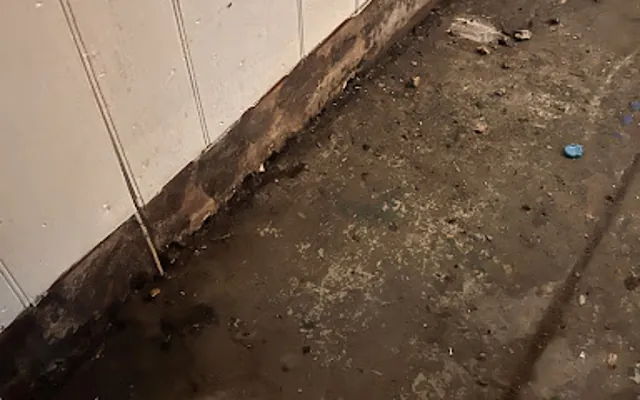
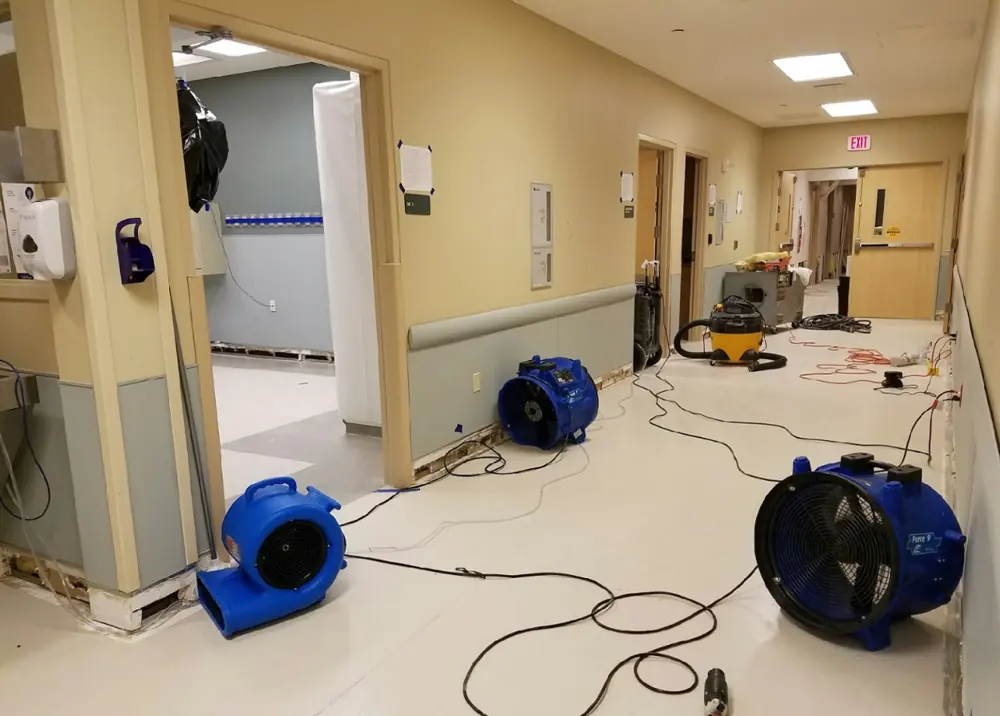
When a floor drain or main line backs up, water can come up through the lowest point in the house instead of going down. Denver crews respond 24/7 to extract the backup, disinfect what it touched, and dry the space.

A crew is typically on-site in about an hour to confirm the backup has stopped and assess how far the water spread.
Standing water is pumped and extracted from the basement floor and any low areas it reached.
Because backup water is contaminated, soaked porous materials near the drain are removed and affected surfaces are cleaned and treated.
Air movers and dehumidifiers dry the space to a moisture-verified target, with readings logged for the insurance claim.

While help is on the way, these first steps, done only where it is safe, limit the damage and protect the insurance claim.
Shut the supply off at the source, or close the home's main valve if the source is not obvious. Stopping the flow limits the damage more than anything else.
Switch off electricity to the affected area, but only if the breaker can be reached without standing in or touching the water.
Get a crew dispatched right away. The sooner extraction and drying begin, the more flooring, drywall, and belongings can be saved.
Take photos and a short video of the water and the affected rooms before anything is moved, so the insurance claim starts strong.
Drain backup cleanup in Denver typically runs from about $600 to $3,000, depending on how much of the basement the water reached and how much contaminated material has to be removed. A backup contained to the floor drain area sits on the low end, while one that spread across a finished basement and soaked baseboards and flooring sits on the high end. Sudden drain backups are often covered under a homeowner policy, sometimes with a sewer backup rider, and the loss is documented and billed direct to the carrier where possible.
Crews reach Denver and the nearby metro fast, from Capitol Hill, Five Points, and Highland to Wheat Ridge, Lakewood, Englewood, and Arvada. See the full list on the areas served across Denver page.
See all areas servedEvery loss is photographed, measured, and logged from the first visit, so the paperwork holds up with the insurance carrier.
Technicians follow recognized IICRC drying standards and prove it with daily moisture readings on Denver homes, not guesswork.
Emergency dispatch any hour of the day or night, with a real crew on the way across the metro, not a callback in the morning.
A real crew dispatched any hour, not a callback in the morning.
Trained technicians following recognized IICRC drying standards.
Truck-mounted, portable, and submersible for any size loss.
The loss is documented and billed to the carrier directly.
Something downstream, a clog, root intrusion, or a line overwhelmed by heavy inflow, blocked the normal flow, so water backed up and came out at the lowest point it could reach, usually a basement floor drain.
Yes. It has been in the sewer or drain system, so it is treated as contaminated water, which means protective handling, removal of porous materials it touched, and disinfection rather than a simple wipe-down.
Homes with original clay or aging cast-iron lateral lines, common in the city's older neighborhoods, are more prone to root intrusion and blockage than newer plastic lines, which raises backup risk during heavy rain.
It depends on the policy. Many homeowner policies exclude backups unless a sewer backup endorsement was added, so coverage varies. The loss is documented thoroughly to support whatever claim applies.
Avoid contact with the water, keep people and pets away from the area, and do not run additional water down drains until the blockage is cleared, since that can add to the backup.
Denver crews are on call 24 hours a day, local and fast, and can be on the way within the hour.
Call (720) 807-8315