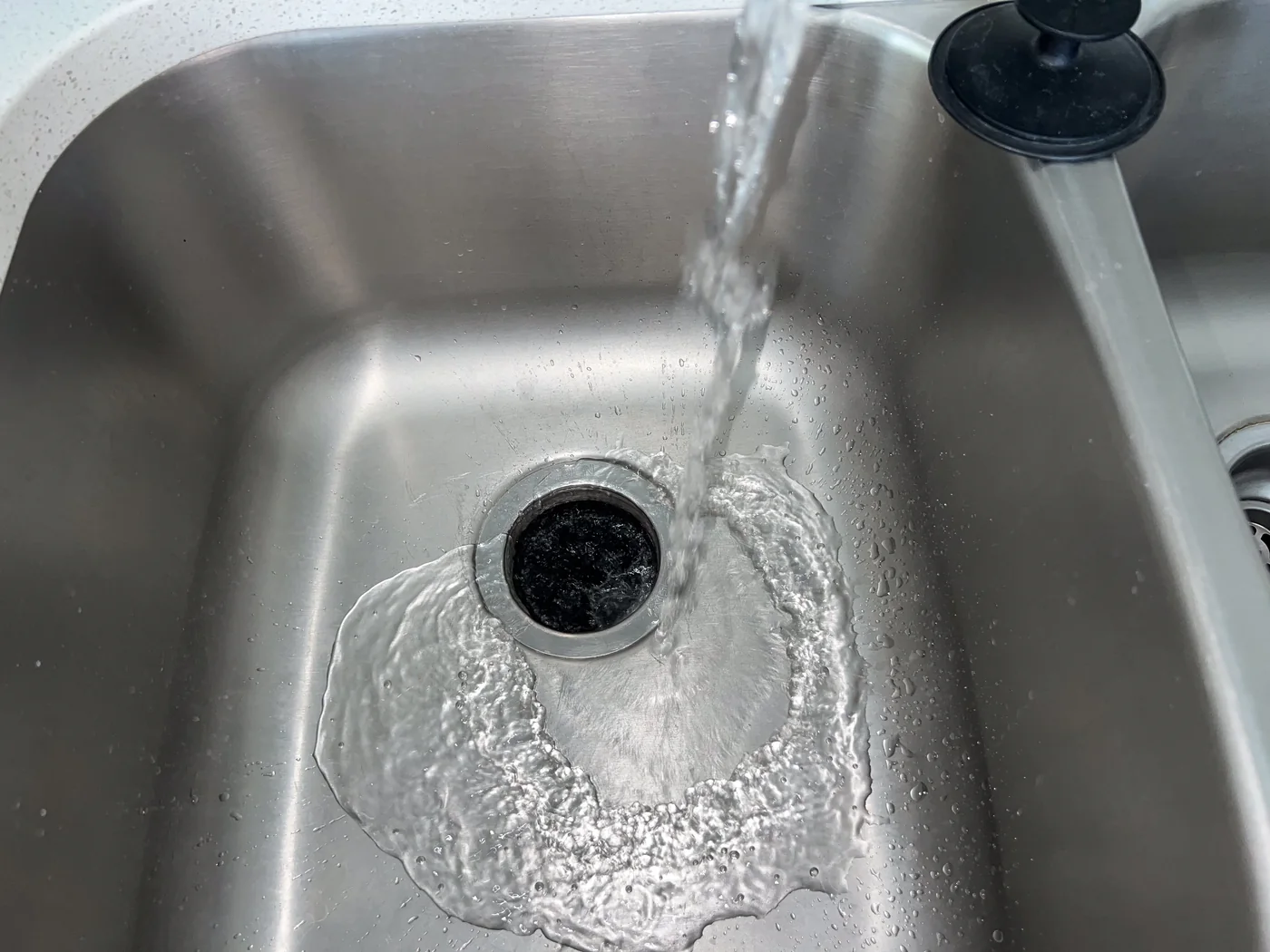
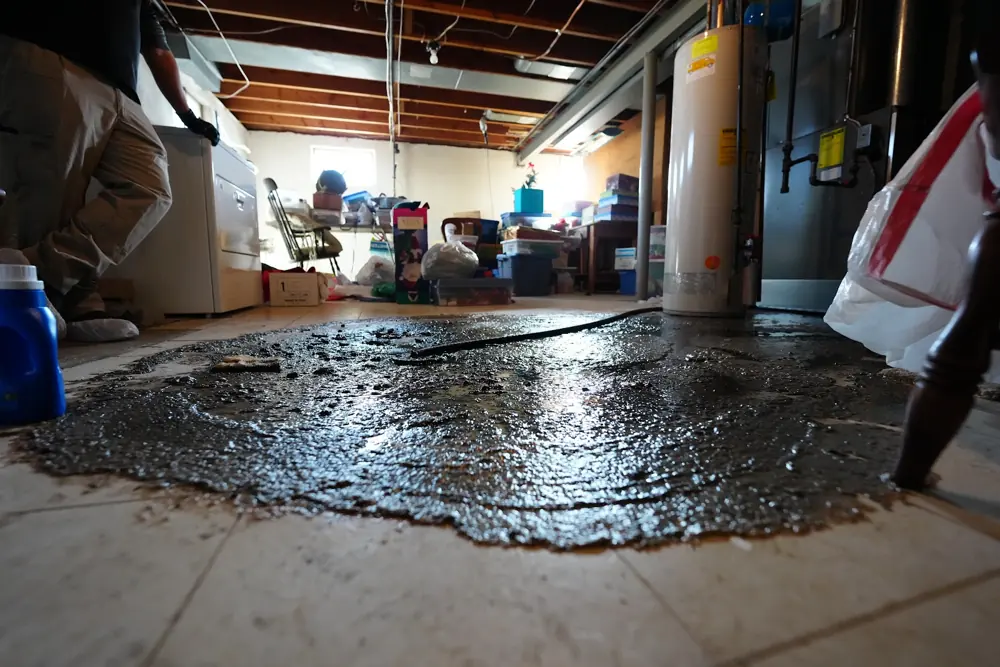
A worn supply line, a corroded shutoff valve, or a loose fixture connection can drip for weeks in a spot nobody checks, then finally soak through a cabinet floor or ceiling. Denver crews respond 24/7 to extract the water and dry whatever it reached.

The crew confirms the leaking fixture or supply line and traces how far the water traveled using moisture meters and, where needed, thermal imaging.
Any pooled water in a cabinet, closet, or wall cavity is extracted.
Cabinet panels, baseboards, or a section of drywall that trapped moisture are opened or removed so the cavity can dry fully.
Air movers and dehumidifiers dry the area to a moisture-verified target, with readings logged for a claim if the loss is significant.

While help is on the way, these first steps, done only where it is safe, limit the damage and protect the insurance claim.
Shut the supply off at the source, or close the home's main valve if the source is not obvious. Stopping the flow limits the damage more than anything else.
Switch off electricity to the affected area, but only if the breaker can be reached without standing in or touching the water.
Get a crew dispatched right away. The sooner extraction and drying begin, the more flooring, drywall, and belongings can be saved.
Take photos and a short video of the water and the affected rooms before anything is moved, so the insurance claim starts strong.
Faucet and fixture leak cleanup in Denver typically runs from about $300 to $1,800, depending on how long the leak ran undetected and how far the water traveled before it was found. A leak caught within days, limited to a cabinet floor, sits on the low end, while a slow leak that ran for weeks and soaked a subfloor or wall cavity sits on the high end. Coverage varies, sudden fixture failures are commonly covered, while damage from a long-known, unaddressed drip may not be, so the discovery timeline is documented carefully.
Crews reach Denver and the nearby metro fast, from Capitol Hill, Five Points, and Highland to Wheat Ridge, Lakewood, Englewood, and Arvada. See the full list on the areas served across Denver page.
See all areas servedEvery loss is photographed, measured, and logged from the first visit, so the paperwork holds up with the insurance carrier.
Technicians follow recognized IICRC drying standards and prove it with daily moisture readings on Denver homes, not guesswork.
Emergency dispatch any hour of the day or night, with a real crew on the way across the metro, not a callback in the morning.
A real crew dispatched any hour, not a callback in the morning.
Trained technicians following recognized IICRC drying standards.
Truck-mounted, portable, and submersible for any size loss.
The loss is documented and billed to the carrier directly.
They are usually slow drips rather than sudden failures, and they happen inside cabinets or wall cavities that are not checked regularly, so weeks can pass before a stain, soft spot, or smell finally reveals them.
No. The crew handles extraction, moisture tracing, and drying of the water damage. Repairing or replacing the fixture or valve itself is plumbing work, and the homeowner is referred to a qualified plumber for that.
Moisture meters and thermal imaging trace water that has traveled beyond the visible wet spot, since a slow leak often follows a joist, wall stud, or cabinet panel to a location well away from the actual source.
Sudden failures are commonly covered, while damage from a leak that was visible and ignored for a long stretch is less likely to be. Documenting when the leak was discovered supports the claim either way.
It depends on how long they were wet. Panels and drywall caught early can sometimes be dried in place, while material that stayed saturated for weeks usually needs to be cut out and replaced.
Denver crews are on call 24 hours a day, local and fast, and can be on the way within the hour.
Call (720) 807-8315