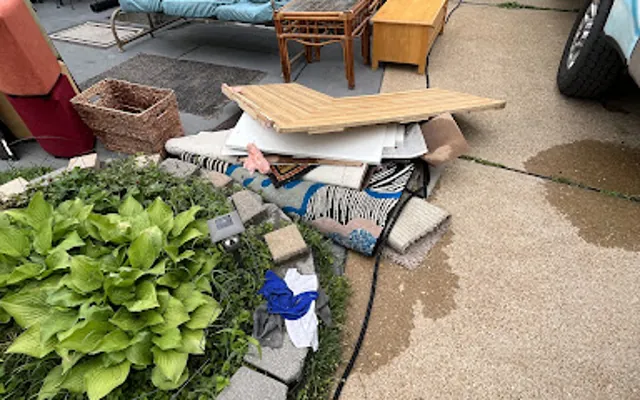
Denver runs on a mix of decades-old cast-iron mains and newer pipe, and the city's hard winter freezes put real stress on that aging infrastructure every year. When a main breaks and sends water into a yard, foundation, or basement, crews respond 24/7 to extract and dry.

A crew arrives in about an hour to assess how the main break water reached the structure and whether it is still actively intruding.
Water pooling against the foundation, in a window well, or already inside a basement is extracted.
Moisture meters check baseboards, drywall, and flooring near the foundation for water that migrated beyond what is visible.
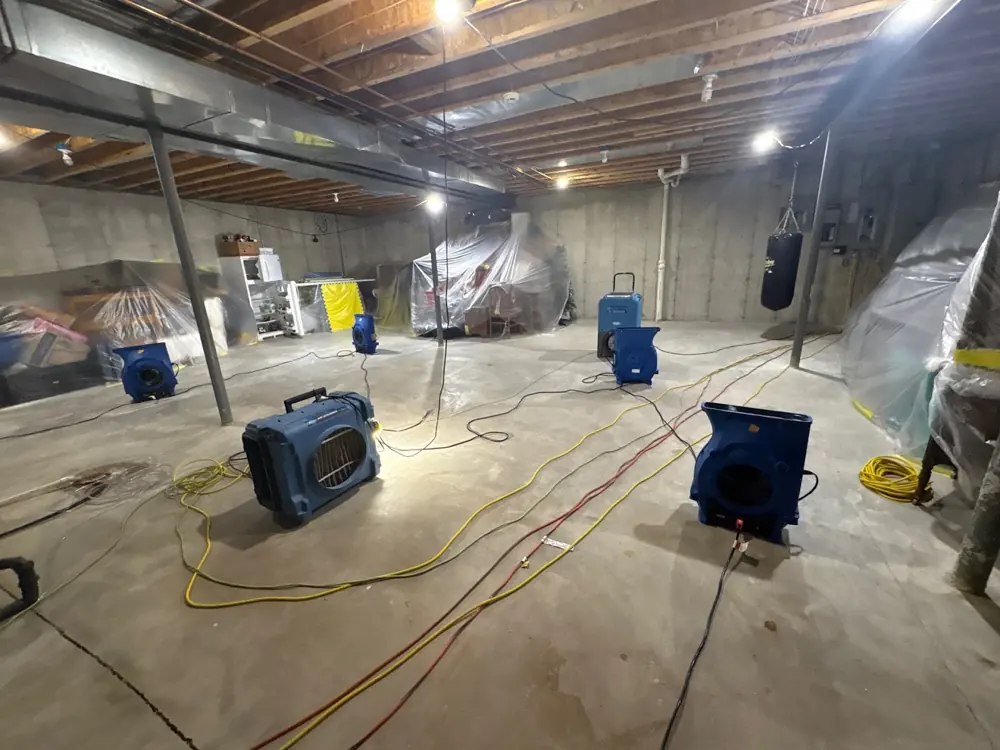
Air movers and dehumidifiers dry the affected area to a verified target, with readings logged for any claim.

While help is on the way, these first steps, done only where it is safe, limit the damage and protect the insurance claim.
Shut the supply off at the source, or close the home's main valve if the source is not obvious. Stopping the flow limits the damage more than anything else.
Switch off electricity to the affected area, but only if the breaker can be reached without standing in or touching the water.
Get a crew dispatched right away. The sooner extraction and drying begin, the more flooring, drywall, and belongings can be saved.
Take photos and a short video of the water and the affected rooms before anything is moved, so the insurance claim starts strong.
Water main break cleanup for the interior portion of a loss typically runs from about $800 to $3,500, depending on how much water entered the home and how far it spread before the main was shut down, which is separate from any repair or replacement the water utility handles for the main itself. A minor foundation-area intrusion caught quickly sits on the low end, while a basement that took on standing water sits on the high end. Coverage for main-break water damage varies by policy and by whether the break was on public or private-side plumbing, so the loss is documented in detail to support whichever claim applies.
Crews reach Denver and the nearby metro fast, from Capitol Hill, Five Points, and Highland to Wheat Ridge, Lakewood, Englewood, and Arvada. See the full list on the areas served across Denver page.
See all areas servedEvery loss is photographed, measured, and logged from the first visit, so the paperwork holds up with the insurance carrier.
Technicians follow recognized IICRC drying standards and prove it with daily moisture readings on Denver homes, not guesswork.
Emergency dispatch any hour of the day or night, with a real crew on the way across the metro, not a callback in the morning.
A real crew dispatched any hour, not a callback in the morning.
Trained technicians following recognized IICRC drying standards.
Truck-mounted, portable, and submersible for any size loss.
The loss is documented and billed to the carrier directly.
A meaningful share of the city's older water mains are cast iron, and hard freeze and thaw cycles put stress on that aging pipe, making breaks more likely to occur in the coldest stretches of winter.
The water utility handles locating and repairing the main in the street or right-of-way. The water damage crew's role is limited to the water that entered the home or property, not the main itself.
Water from a public main break is generally treated as clean water, unlike sewage or floodwater, though extraction and drying still happen quickly to prevent secondary damage like mold.
It varies by policy and by whether the break happened on the utility's side of the line or the homeowner's private service line. The loss is documented thoroughly so it can be matched to whichever coverage applies.
As soon as it is noticed. Water pooling against a foundation or in a window well can find its way inside quickly, so early extraction limits how much interior material gets wet.
Denver crews are on call 24 hours a day, local and fast, and can be on the way within the hour.
Call (720) 807-8315