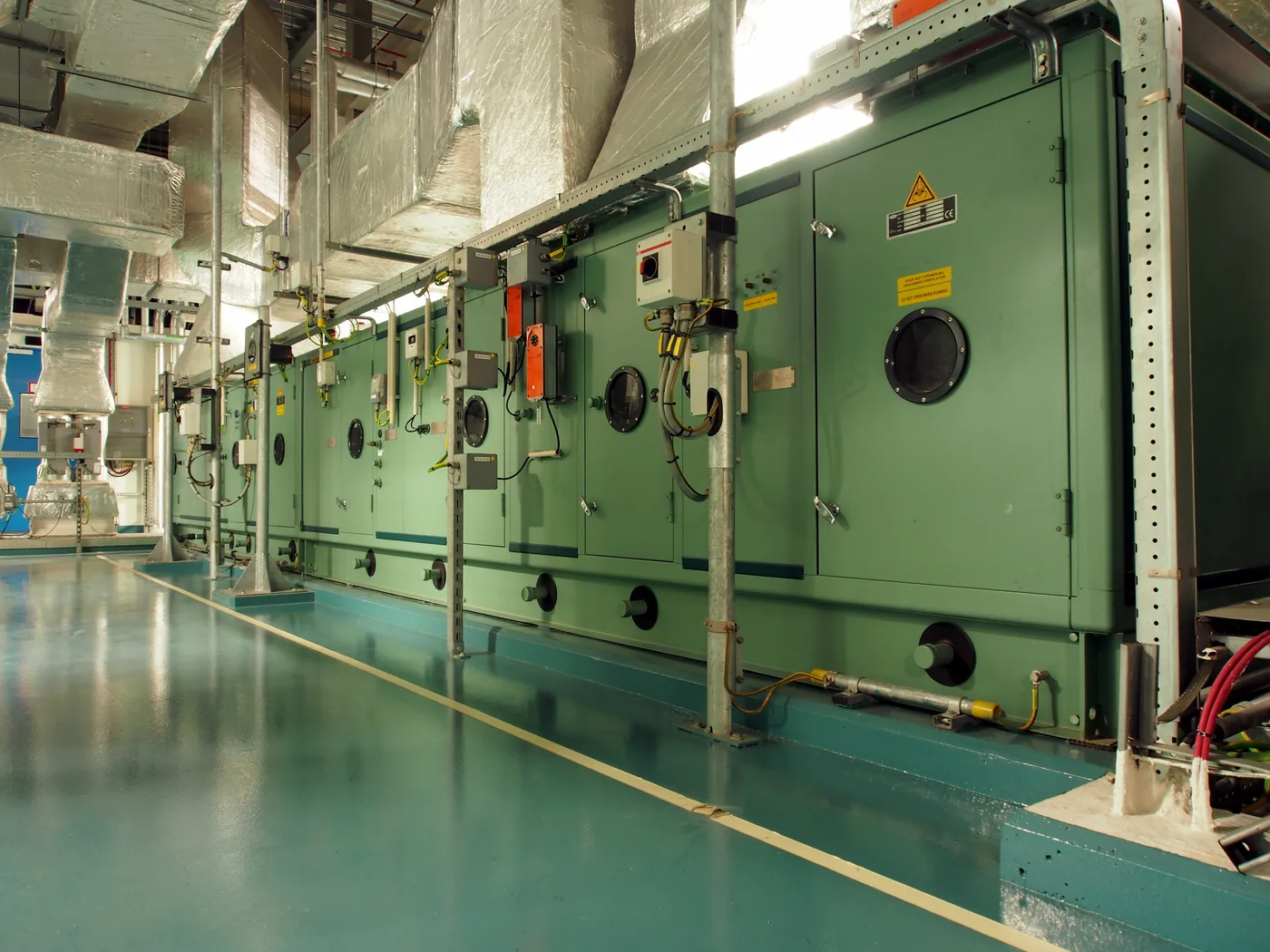
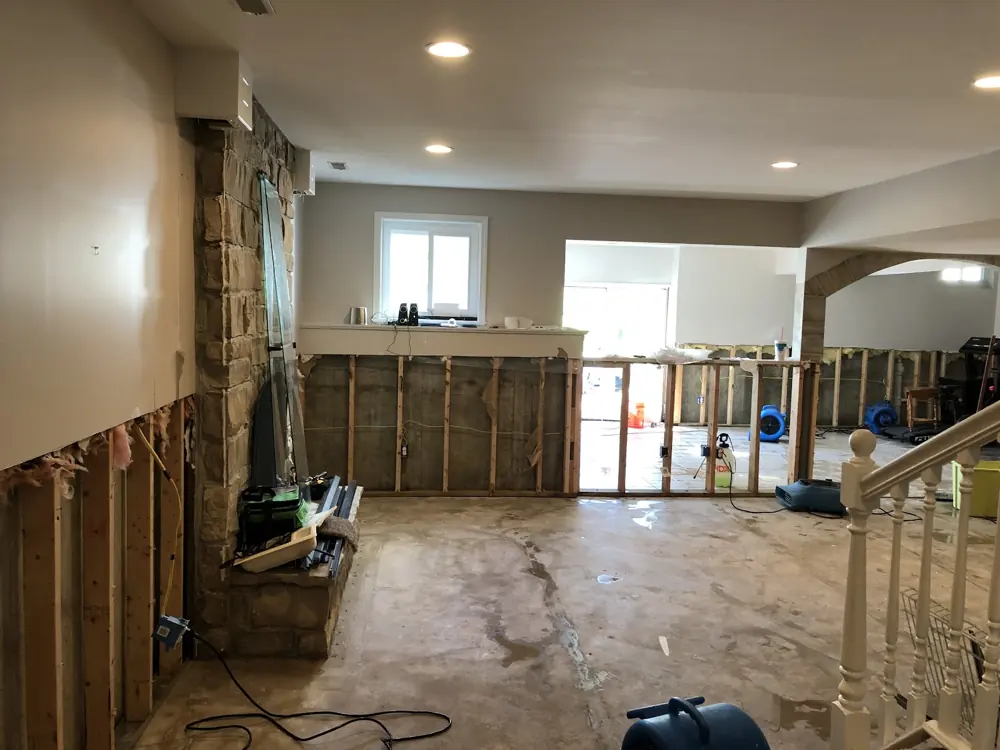
A central air unit's condensate line can clog quietly for weeks before it backs up and sends water through a closet ceiling or across a mechanical room floor. Denver crews respond 24/7 to extract the water and dry whatever it reached.

The crew confirms the condensate line or overflow pan is the source and that the HVAC system has been shut down or the line cleared.
Water pooled in a closet, mechanical room, or on the ceiling below is extracted before it spreads further.
Moisture meters trace how far the water traveled through drywall, insulation, and framing near the unit.
Air movers and dehumidifiers dry the affected area to a verified target, with the loss documented for a claim if needed.

While help is on the way, these first steps, done only where it is safe, limit the damage and protect the insurance claim.
Shut the supply off at the source, or close the home's main valve if the source is not obvious. Stopping the flow limits the damage more than anything else.
Switch off electricity to the affected area, but only if the breaker can be reached without standing in or touching the water.
Get a crew dispatched right away. The sooner extraction and drying begin, the more flooring, drywall, and belongings can be saved.
Take photos and a short video of the water and the affected rooms before anything is moved, so the insurance claim starts strong.
HVAC condensation damage cleanup in Denver typically runs from about $400 to $2,000, depending on how long the drain line was clogged before discovery and how far the water traveled through the ceiling or wall cavity. A leak caught within a day or two, limited to a small ceiling stain, sits on the low end, while weeks of slow leaking that soaked insulation and drywall across a closet and the room below sits on the high end. This kind of sudden, accidental water damage is commonly covered, though ongoing maintenance neglect may not be, so the loss is documented carefully.
Crews reach Denver and the nearby metro fast, from Capitol Hill, Five Points, and Highland to Wheat Ridge, Lakewood, Englewood, and Arvada. See the full list on the areas served across Denver page.
See all areas servedEvery loss is photographed, measured, and logged from the first visit, so the paperwork holds up with the insurance carrier.
Technicians follow recognized IICRC drying standards and prove it with daily moisture readings on Denver homes, not guesswork.
Emergency dispatch any hour of the day or night, with a real crew on the way across the metro, not a callback in the morning.
A real crew dispatched any hour, not a callback in the morning.
Trained technicians following recognized IICRC drying standards.
Truck-mounted, portable, and submersible for any size loss.
The loss is documented and billed to the carrier directly.
The line clogs gradually, and the HVAC system keeps running normally even as the drain backs up, so there is often no obvious sign until the overflow pan fills and water starts showing through a ceiling or wall.
No. Extraction, moisture tracing, and drying of the water damage is the focus. Clearing the condensate line or servicing the unit is HVAC work, and the homeowner is referred to a qualified technician for that.
Often a stained section can be dried, primed, and repainted if the drywall itself was not soaked through. If the drywall stayed wet for an extended period, that section may need to be cut out and replaced.
Sudden water damage from a condensate line failure is often covered, while damage traced to a long-neglected, known leak may not be. Documenting when the leak was discovered and how far it spread supports the claim either way.
Regular HVAC maintenance that includes clearing the condensate line and checking the overflow pan or float switch catches most of these leaks before they cause interior damage.
Denver crews are on call 24 hours a day, local and fast, and can be on the way within the hour.
Call (720) 807-8315