When a pipe bursts in a Capitol Hill, CO home, local crews can typically be on-site within about an hour. They follow IICRC-standard methods to stop the flow, extract water, and dry the structure thoroughly.

A crew reaches a Capitol Hill address quickly to confirm the water main is off. They then use moisture meters to trace exactly how far the water has traveled through walls and floors from the burst point.
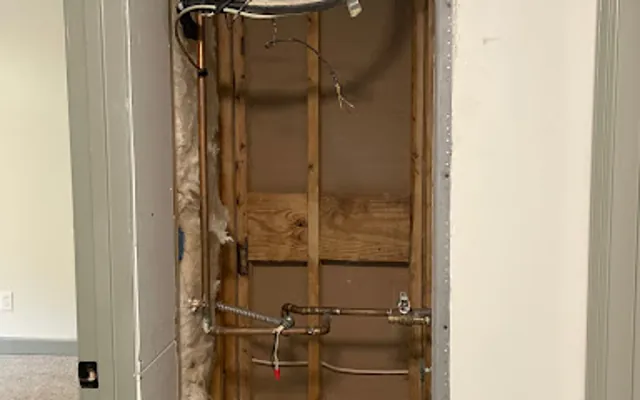
Standing water is extracted from every saturated area, from basement slabs to upper floors. Wet drywall and insulation along the water's path are opened to allow air circulation into wall and ceiling cavities.
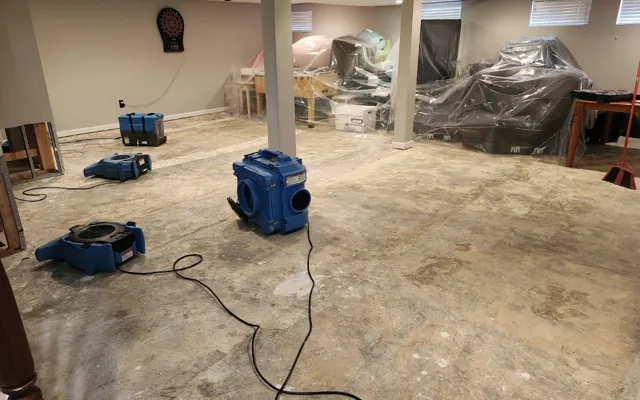
Industrial dehumidifiers and air movers run continuously. Technicians take daily moisture readings in framing and subfloors until everything meets dry standards, with all data logged for the property owner's records.

Burst pipe cleanup in Capitol Hill typically runs from about $1,500 to $7,500, depending on how long the water ran before the main was shut off, how many rooms or levels were affected, and how much drywall or flooring needs to come out. A break caught within minutes in an accessible spot sits toward the low end; a line that runs for hours through multiple floors sits toward the high end. Sudden, accidental water damage from a burst pipe is commonly a covered loss, separate from the qualified plumber's cost to repair the line, and moisture documentation is provided to support the claim.
Capitol Hill, CO is defined by its historic brick homes, rowhouses, and courtyard apartments, many with original galvanized plumbing and full basements. A burst pipe in this dense, century-old district can send water traveling through multiple rooms and levels in a short time, requiring a rapid response to limit damage. The combination of aging galvanized plumbing in historic buildings, full basements, and Denver's high-altitude climate with its freeze-thaw cycles makes burst pipes a common winter and early spring issue for Capitol Hill property owners. From Capitol Hill, crews also cover nearby Five Points, Cheesman Park, City Park West, Curtis Park, Speer, Congress Park. See every neighborhood and town on the full service area page.
See all areas servedEvery loss is photographed, measured, and logged from the first visit, so the paperwork holds up with the insurance carrier.
Technicians follow recognized IICRC drying standards and prove it with daily moisture readings on Capitol Hill homes, not guesswork.
Emergency dispatch any hour of the day or night, with a real crew on the way across the metro, not a callback in the morning.
A real crew dispatched any hour, not a callback in the morning.
Trained technicians following recognized IICRC drying standards.
Truck-mounted, portable, and submersible for any size loss.
The loss is documented and billed to the carrier directly.
Costs depend on the water's runtime and how many areas are affected. A simple, contained leak may be around $1,500, while water that runs for hours through multiple floors can approach $7,500. The cleanup is typically a separate, covered insurance claim from the plumbing repair.
Not necessarily. Technicians only remove drywall and insulation that is saturated. The goal is to open wet cavities to dry them properly. In many Capitol Hill homes, this means targeted flood cuts rather than full wall removal, preserving original plaster where possible.
Crews are on call 24 hours a day and can be on the way to Capitol Hill within the hour.
Call (720) 807-8315