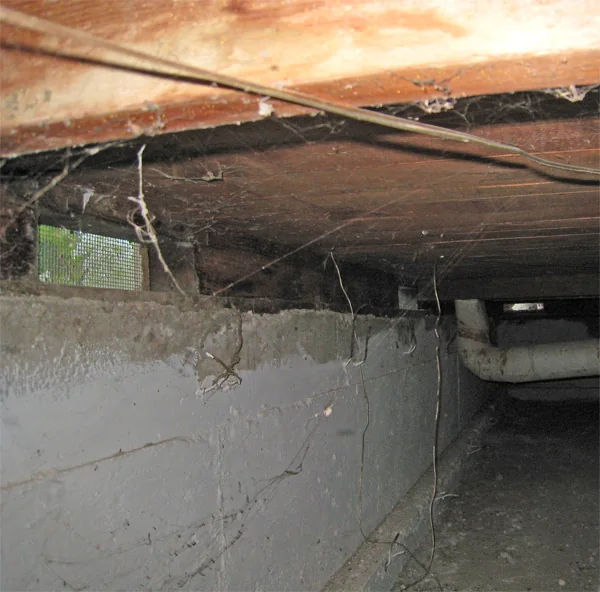
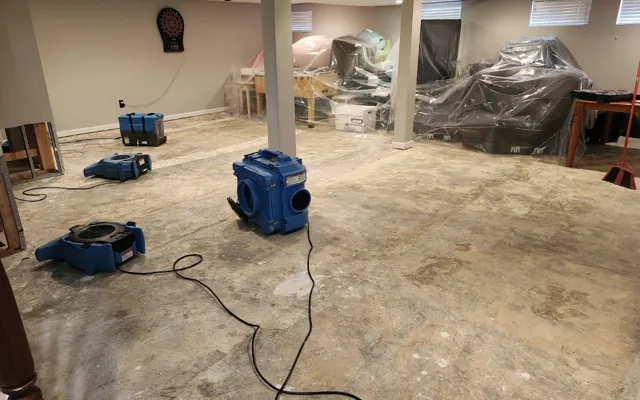
Local crews in Glendale, CO respond fast to wet crawlspace issues, using IICRC-standard methods to extract water, remove saturated insulation, and confirm the space is dry, protecting the structure and indoor air quality.

Technicians arrive quickly to assess crawlspace entry points in Glendale's multifamily buildings. They determine the extent of standing water and map the path of intrusion from the upper floors.
Using equipment designed for tight spaces, the crew efficiently pumps out standing water. They also identify and remove any insulation that has been saturated, which is common in these creekside structures.
Air movers and dehumidifiers are placed to circulate dry air throughout the confined space. The team uses moisture meters to verify the joists and subfloor meet drying standards before equipment is removed.

Crawlspace water removal in Glendale typically runs from about $700 to $3,500, depending on how much standing water is present, how much insulation needs replacing, and how accessible the crawlspace is. A shallow, easily accessed crawlspace with minor water sits toward the low end; a larger space with saturated insulation and limited access sits toward the high end. Sudden water intrusion from a burst line is commonly covered, while chronic groundwater seepage depends on the specific policy, and moisture documentation is provided either way to support the claim.
In Glendale's dense apartment and condo complexes along Cherry Creek, shared plumbing risers and stacked units can turn a single pipe failure into a multi-floor water event. Crawlspace moisture from such a leak can quickly affect the building's structural stability and air quality for residents. In Glendale, CO, crawlspace water often comes from appliance or supply-line failures in shared plumbing stacks, or from stormwater intrusion during heavy summer rains near Cherry Creek. The dry, high-altitude climate also contributes to soil movement that can stress foundation seals. From Glendale, crews also cover nearby Platt Park, Elyria-Swansea, Athmar Park, Mountain View, Sloan Lake, Sunnyside. See every neighborhood and town on the full service area page.
See all areas servedEvery loss is photographed, measured, and logged from the first visit, so the paperwork holds up with the insurance carrier.
Technicians follow recognized IICRC drying standards and prove it with daily moisture readings on Glendale homes, not guesswork.
Emergency dispatch any hour of the day or night, with a real crew on the way across the metro, not a callback in the morning.
A real crew dispatched any hour, not a callback in the morning.
Trained technicians following recognized IICRC drying standards.
Truck-mounted, portable, and submersible for any size loss.
The loss is documented and billed to the carrier directly.
In the Denver area, costs generally range from about $700 to $3,500. The final price depends on the amount of standing water, how much insulation needs replacement, and the crawlspace's accessibility in Glendale's multifamily buildings.
Sudden water intrusion, like from a burst pipe, is commonly covered. Coverage for chronic seepage depends on the specific policy. Local crews provide detailed moisture documentation to support any claim, regardless of the source.
Crews are on call 24 hours a day and can be on the way to Glendale within the hour.
Call (720) 807-8315