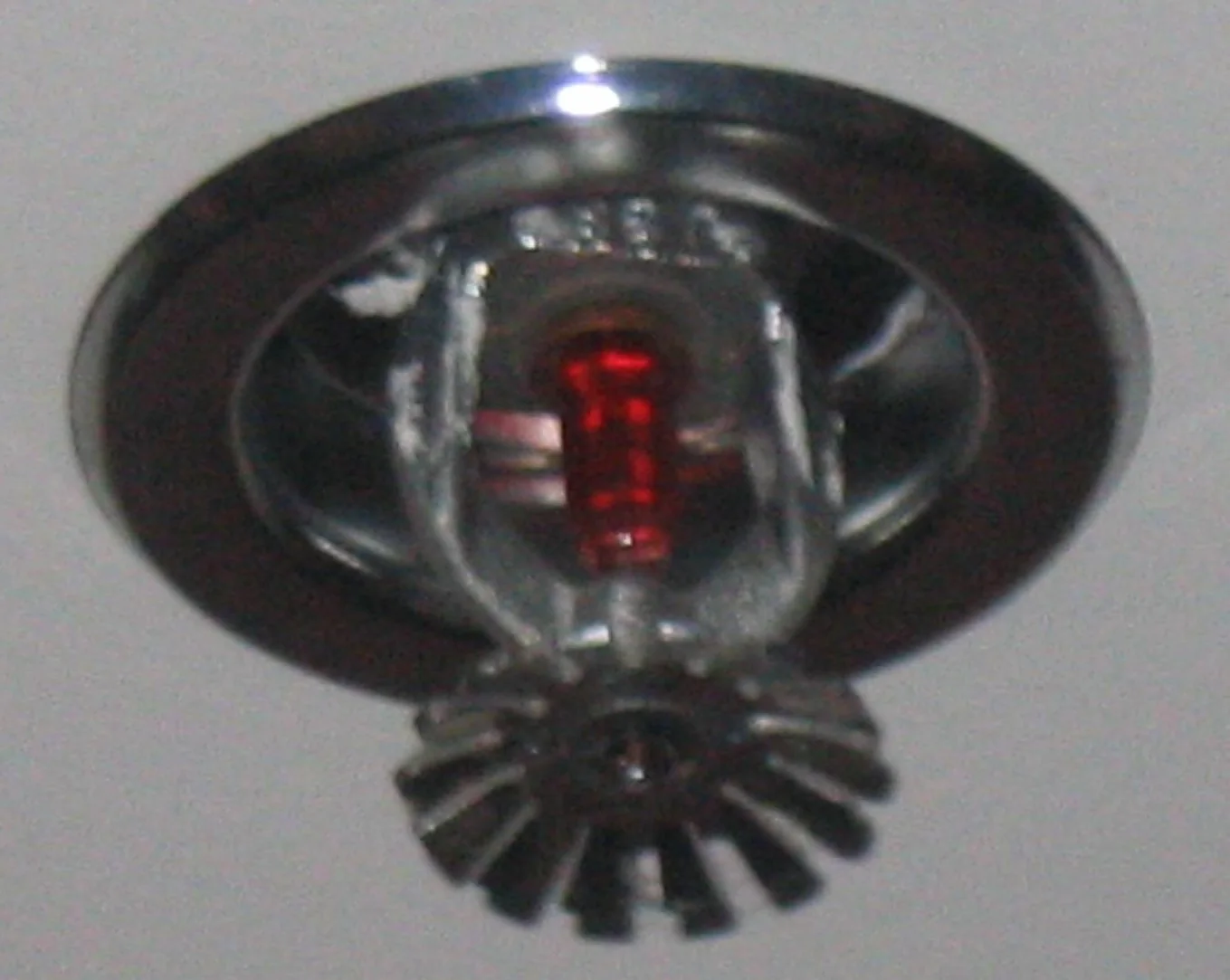
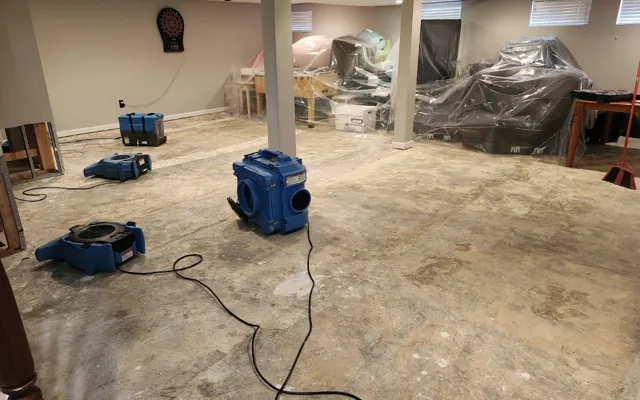
When a fire sprinkler discharges in Baker, CO, local crews can be onsite within about an hour. They follow IICRC-standard methods to extract water, open wet walls, and verify drying, preventing secondary damage in historic homes.

A crew arrives at a Baker home in about an hour. They first determine how many rooms and floors the sprinkler discharge has reached before starting the extraction process.
Using truck-mounted and portable units, technicians quickly pull standing water from hardwood floors, saturated carpets, and any water pooled in ceiling cavities or basements.
Saturated drywall and insulation are opened or removed so moisture isn't sealed in. Air movers and dehumidifiers are then staged in each affected area to dry it completely.

Fire sprinkler discharge cleanup in Baker typically runs from about $2,500 to $10,000 or more, driven heavily by how many rooms, units, or floors the water reached before the system was shut off. A single room affected by a quickly stopped discharge sits on the low end, while water that traveled through ceilings into multiple condo units or office suites sits on the high end. Because sprinkler discharge often affects shared building systems, the claim may involve both the unit owner's policy and the building's, and every affected area is documented separately to support that process.
In the historic district of Baker, CO, many of the Victorian and early-1900s brick homes have full basements and original galvanized plumbing. A hard freeze in an unheated crawlspace can split a pipe or cause a sprinkler line to fail, sending water through multiple floors fast, requiring immediate cleanup. Baker's older homes often have original plumbing in unheated crawlspaces. The high-altitude, semi-arid climate brings hard freezes that can split lines, while the multi-story construction means sprinkler discharge can quickly travel from a basement to upper floors. From Baker, crews also cover nearby Whittier, Cole, LoHi (Lower Highland), Jefferson Park, Congress Park, Country Club. See every neighborhood and town on the full service area page.
See all areas servedEvery loss is photographed, measured, and logged from the first visit, so the paperwork holds up with the insurance carrier.
Technicians follow recognized IICRC drying standards and prove it with daily moisture readings on Baker homes, not guesswork.
Emergency dispatch any hour of the day or night, with a real crew on the way across the metro, not a callback in the morning.
A real crew dispatched any hour, not a callback in the morning.
Trained technicians following recognized IICRC drying standards.
Truck-mounted, portable, and submersible for any size loss.
The loss is documented and billed to the carrier directly.
In the Denver area, cleanup typically ranges from about $2,500 to $10,000 or more. The final cost is driven by how many rooms or floors were affected. A single, quickly contained room is on the low end, while water that traveled through ceilings into multiple units is higher.
In Baker's historic homes, water can travel behind plaster walls and through floor cavities. If not fully extracted and dried, this trapped moisture leads to mold and structural rot. Technicians open affected areas to ensure drying is complete, which is critical in older construction.
Crews are on call 24 hours a day and can be on the way to Baker within the hour.
Call (720) 807-8315