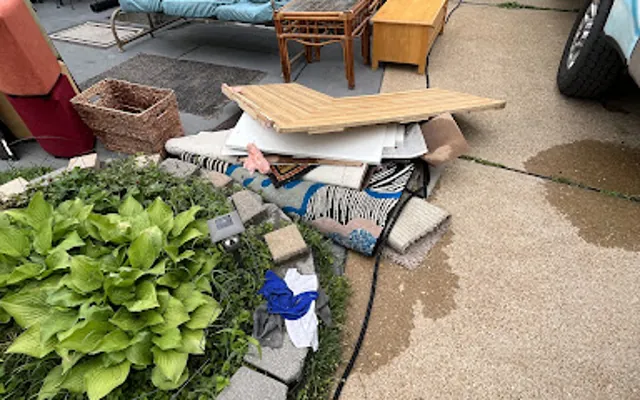
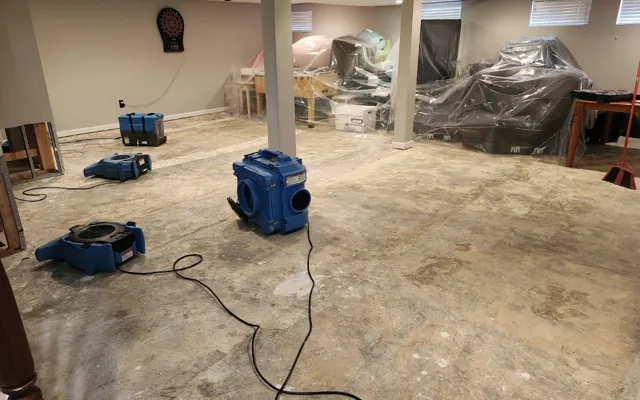
When hurricane winds or flash floods hit Cheesman Park, CO, local crews respond fast to contain the damage. Technicians follow IICRC-standard methods to dry out historic basements and protect turn-of-the-century homes from lasting structural issues.

The team first ensures safety by checking for electrical risks in the wet basement. They identify if water came from overland storm runoff, a sewer backup, or a compromised roof, mapping its path through the Cheesman Park home.
High-powered pumps clear standing water from basements and ground floors. Soaked, contaminated materials like carpet and drywall from street floodwater are removed promptly to prevent mold in these older structures.
Air movers and dehumidifiers dry the framing and subfloor to a verified moisture standard. Every reading is logged to create a thorough record for the homeowner's flood or property insurance claim.

Flood cleanup in Cheesman Park typically runs from about $2,000 to $8,000 or more, depending on how much water entered, whether it came from a storm drain backup or creek overflow, and how many rooms and how much of the basement were affected. A shallow basement intrusion caught quickly sits on the low end, while several inches of contaminated water across a finished lower level sits on the high end. Overland flood damage often falls outside a standard homeowner policy and may need a separate flood policy, so the loss is documented in detail to support whichever coverage applies.
In the historic Cheesman Park neighborhood, century-old brick mansions and apartment buildings with full basements face a high risk from water intrusion. Aging cast-iron drain lines can back up, and hard winter freezes or summer hailstorms often compromise old roofing, leading to serious seepage and flood damage inside these Denver homes. Cheesman Park's older homes with deep basements, combined with its location in Denver's semi-arid climate, create risk. Sudden hailstorms, winter freezes, and aged infrastructure increase the chances of both roof leaks and sewer backups, turning heavy rain into interior flooding. From Cheesman Park, crews also cover nearby Five Points, City Park West, Curtis Park, Speer, Capitol Hill, Congress Park. See every neighborhood and town on the full service area page.
See all areas servedEvery loss is photographed, measured, and logged from the first visit, so the paperwork holds up with the insurance carrier.
Technicians follow recognized IICRC drying standards and prove it with daily moisture readings on Cheesman Park homes, not guesswork.
Emergency dispatch any hour of the day or night, with a real crew on the way across the metro, not a callback in the morning.
A real crew dispatched any hour, not a callback in the morning.
Trained technicians following recognized IICRC drying standards.
Truck-mounted, portable, and submersible for any size loss.
The loss is documented and billed to the carrier directly.
Typically, water that comes from overland flooding, like street runoff, requires a separate flood policy. However, water from a sewer or drain backup might be covered under a standard policy. Local crews document the source meticulously to help homeowners navigate their specific coverage in Denver.
Drying a full basement in these historic brick homes usually takes several days. The process depends on the amount of water, the materials affected, and ambient humidity. Technicians use meters to verify that moisture deep in plaster and subfloors has reached a safe, dry standard.
Crews are on call 24 hours a day and can be on the way to Cheesman Park within the hour.
Call (720) 807-8315