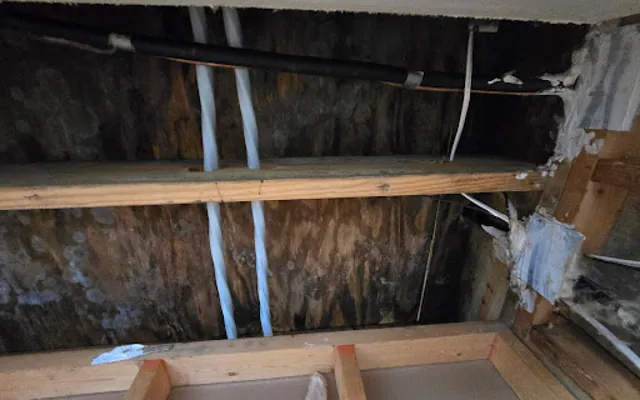
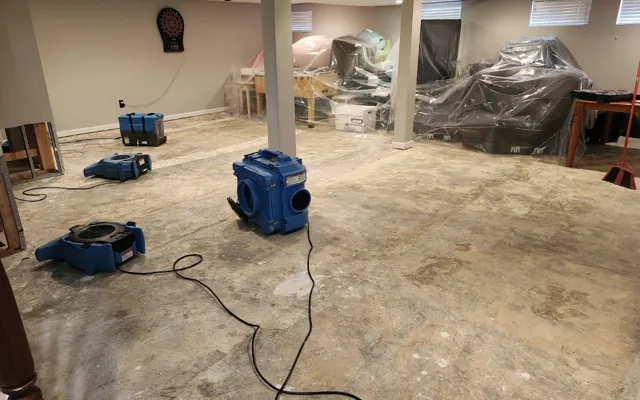
When an ice dam in Highland, CO leaks meltwater into the attic, local crews respond quickly to trace, extract, and dry the damage, following IICRC-standard methods to protect the home's structure and contents.

Technicians start in the attic to find where meltwater entered from the roof, then check for hidden moisture in wall cavities and ceilings below, mapping the full extent of the intrusion in the home.
The crew extracts any pooled water and carefully opens or removes sections of wet insulation, drywall, or ceiling that are too saturated to dry in place, preventing trapped moisture from causing further damage.
Air movers and dehumidifiers are strategically placed in the attic and affected cavities to dry the structure to a precise standard, with final moisture readings confirming the home is ready for repairs.

Ice dam water damage cleanup in Highland typically runs from about $1,200 to $5,500, depending on how far the meltwater traveled through the attic and down into wall and ceiling cavities before it was caught. A localized attic intrusion found early sits on the low end, while meltwater that ran down interior walls and stained ceilings across multiple rooms after a heavy upslope storm sits on the high end. Sudden ice-dam water intrusion is commonly covered under a homeowner policy, and the loss, along with moisture readings and photos, is documented and billed direct to the carrier where possible.
In the historic brick homes and newer infill of Highland, CO, ice dams pose a particular risk. Meltwater from a dam can seep under roof shingles, travel down into the attic insulation, and then into wall cavities and ceilings, especially in the neighborhood's older housing with its full basements. This hidden moisture, if left unchecked, leads to rot and mold. Highland's high-altitude, semi-arid climate brings intense winter sun that melts snow on roofs, followed by freezing nights that create ice dams at the eaves. Meltwater then backs up under shingles on the neighborhood's older roofs and enters the aging structures below. From Highland, crews also cover nearby Washington Park West, Cole, LoHi (Lower Highland), Jefferson Park, Baker, Whittier. See every neighborhood and town on the full service area page.
See all areas servedEvery loss is photographed, measured, and logged from the first visit, so the paperwork holds up with the insurance carrier.
Technicians follow recognized IICRC drying standards and prove it with daily moisture readings on Highland homes, not guesswork.
Emergency dispatch any hour of the day or night, with a real crew on the way across the metro, not a callback in the morning.
A real crew dispatched any hour, not a callback in the morning.
Trained technicians following recognized IICRC drying standards.
Truck-mounted, portable, and submersible for any size loss.
The loss is documented and billed to the carrier directly.
In Highland, CO, sudden water intrusion from an ice dam is commonly a covered loss under a standard homeowner's policy. Local crews document the damage with moisture readings and photos, and can typically bill the insurance carrier directly, simplifying the process for the homeowner.
Drying time depends on how far the water traveled. For a contained attic leak in a Highland home, it may take 2 to 3 days. If water seeped into wall cavities or multiple rooms, the process can extend to 5 or more days with professional equipment running continuously.
Crews are on call 24 hours a day and can be on the way to Highland within the hour.
Call (720) 807-8315