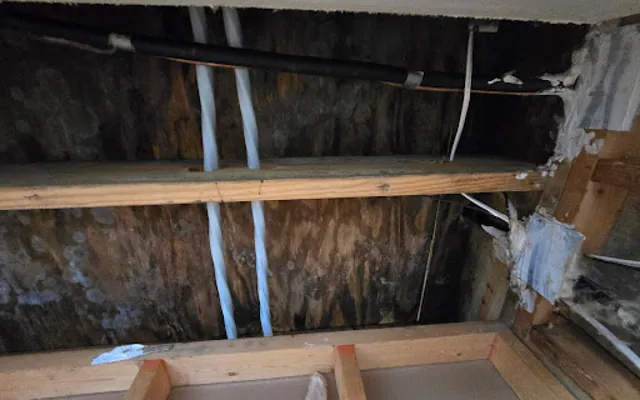
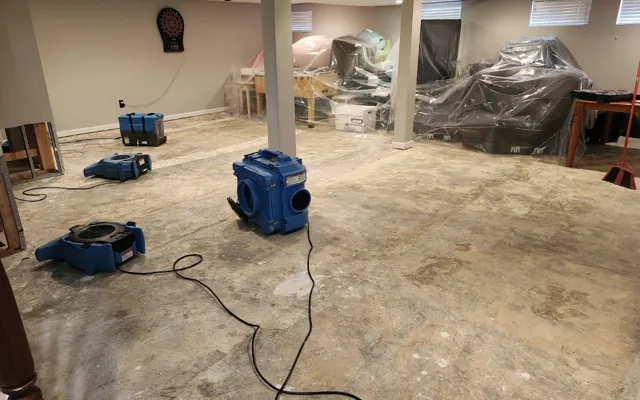
When ice dam meltwater intrudes into a University Park, CO attic, local crews respond quickly to map the path, extract water, and dry the structure using IICRC-standard methods to prevent hidden moisture damage in the home's older construction.

Technicians start by checking the attic insulation and roof deck in a University Park home to find exactly where meltwater is entering, then follow its path down into exterior wall cavities and ceilings to map the full damage.
The crew extracts any pooled water, then carefully opens or removes soaked ceiling sections, drywall, and insulation that is too wet to dry in place, preventing moisture from being trapped behind surfaces.
Industrial air movers and dehumidifiers are placed in the affected attic and wall cavities. Technicians take moisture readings to confirm everything is dry to standard, documenting the process for the homeowner.

Ice dam water damage cleanup in University Park typically runs from about $1,200 to $5,500, depending on how far the meltwater traveled through the attic and down into wall and ceiling cavities before it was caught. A localized attic intrusion found early sits on the low end, while meltwater that ran down interior walls and stained ceilings across multiple rooms after a heavy upslope storm sits on the high end. Sudden ice-dam water intrusion is commonly covered under a homeowner policy, and the loss, along with moisture readings and photos, is documented and billed direct to the carrier where possible.
In University Park, the brick bungalows and Tudor-style homes built from the 1920s to 1940s often have full basements and original plumbing, but their aging roofs and attics are vulnerable to ice dams. Spring snowmelt from heavy upslope storms can push meltwater past roofing, where it soaks insulation and drips into wall cavities and ceilings below. The combination of Denver's dry, high-altitude climate with intense freeze-thaw cycles, mature trees over homes, and the neighborhood's historic roofs creates perfect conditions for ice dams to form and force meltwater into vulnerable attics and walls. From University Park, crews also cover nearby Wheat Ridge, Montclair, Central Park (Stapleton), Berkley, Commerce City, Edgewater. See every neighborhood and town on the full service area page.
See all areas servedEvery loss is photographed, measured, and logged from the first visit, so the paperwork holds up with the insurance carrier.
Technicians follow recognized IICRC drying standards and prove it with daily moisture readings on University Park homes, not guesswork.
Emergency dispatch any hour of the day or night, with a real crew on the way across the metro, not a callback in the morning.
A real crew dispatched any hour, not a callback in the morning.
Trained technicians following recognized IICRC drying standards.
Truck-mounted, portable, and submersible for any size loss.
The loss is documented and billed to the carrier directly.
For sudden, accidental intrusion, most homeowner policies in Colorado do provide coverage. Local restoration crews document the entire loss with photos and moisture readings, which helps streamline the claims process with the insurance carrier.
Drying a typical attic and wall cavity intrusion in a University Park home usually takes 3 to 5 days. The timeframe depends on how far the water traveled and the extent of materials, like insulation, that needed to be removed for proper drying.
Crews are on call 24 hours a day and can be on the way to University Park within the hour.
Call (720) 807-8315