When a septic tank backs up into a Capitol Hill, CO basement, local crews respond within the hour. They contain and remove the contaminated water, following IICRC-standard methods for a verified dry home.

Local crews arrive at a Capitol Hill home quickly to assess the safety of the scene. They confirm the backup is from the septic system, not the city line, and set up containment before any work begins.
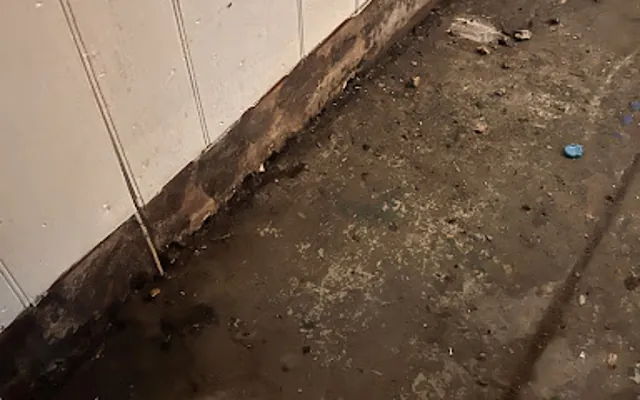
Technicians in full protective gear pump out and extract all standing Category 3 water. Any porous materials the backup touched, like carpet, baseboards, and lower drywall, are removed for proper disposal rather than cleaned.
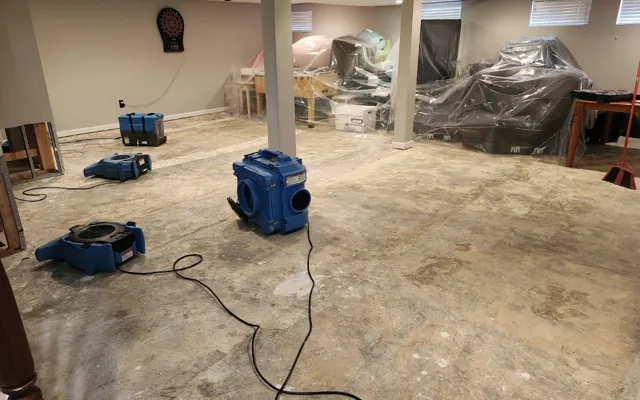
The affected structural surfaces are thoroughly cleaned and disinfected. Crews then dry the area with industrial equipment, documenting moisture levels until they meet the verified dry standard required for the job.

Septic tank backup cleanup typically runs from about $1,000 to $4,500, depending on how much of the home the backup reached and how much contaminated material has to be removed and discarded. A backup contained to a utility area sits on the low end, while one that spread across a finished basement sits on the high end, and any needed septic system repair or pumping is a separate cost outside the cleanup itself. Sudden septic backups are often covered under a homeowner policy, sometimes with a sewer or septic backup endorsement, and the loss is documented for the carrier.
In Capitol Hill's historic homes, with their full basements and original galvanized plumbing, a septic tank backup is a severe contamination event. The Category 3 water can rapidly soak porous materials and pose a health risk, requiring immediate professional containment and removal to protect the structure. Many Capitol Hill homes still have original, aging septic systems or laterals. In this dense urban neighborhood, root intrusion from mature trees or a simple system overload can force contaminated water back through the drains into the property's lower levels. From Capitol Hill, crews also cover nearby Five Points, Cheesman Park, City Park West, Curtis Park, Speer, Congress Park. See every neighborhood and town on the full service area page.
See all areas servedEvery loss is photographed, measured, and logged from the first visit, so the paperwork holds up with the insurance carrier.
Technicians follow recognized IICRC drying standards and prove it with daily moisture readings on Capitol Hill homes, not guesswork.
Emergency dispatch any hour of the day or night, with a real crew on the way across the metro, not a callback in the morning.
A real crew dispatched any hour, not a callback in the morning.
Trained technicians following recognized IICRC drying standards.
Truck-mounted, portable, and submersible for any size loss.
The loss is documented and billed to the carrier directly.
Sudden septic backups are often covered by a standard homeowner policy, sometimes requiring a specific endorsement. Local crews document the entire loss with photos and moisture readings, providing the detailed report needed for a Capitol Hill homeowner to file their claim.
Cost depends entirely on the extent of contamination. A backup contained to a small utility room may be on the lower end, while one that spreads across a finished basement requires more material removal and is higher. Septic system repair is a separate cost from the cleanup itself.
Crews are on call 24 hours a day and can be on the way to Capitol Hill within the hour.
Call (720) 807-8315