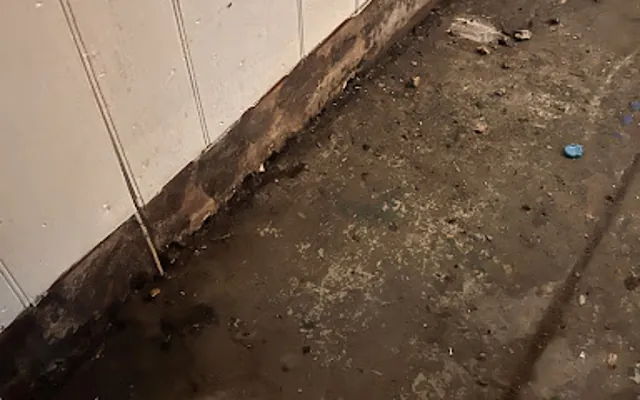
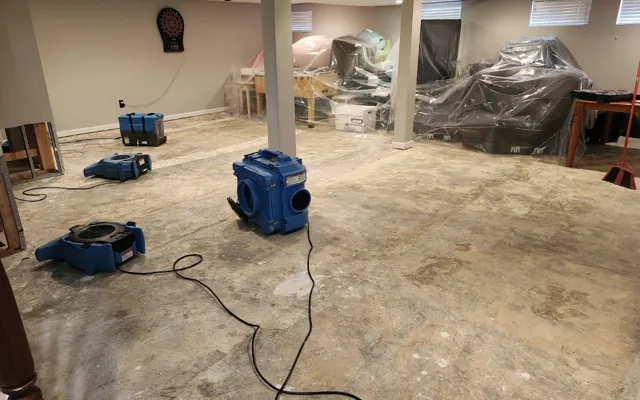
When a sewage backup hits a Capitol Hill, CO home, local crews are typically on site within an hour. They follow IICRC-standard methods to contain Category 3 water, protect the property, and start the cleanup process.

Upon arrival at a Capitol Hill residence, a crew in protective gear quickly isolates the affected area. This prevents sewage contaminants from spreading to other parts of the home, a critical step in older buildings with interconnected spaces.
Technicians identify and remove all porous materials that contacted the sewage, such as saturated carpet, pad, and drywall. In these historic homes, proper disposal is essential as these items cannot be safely dried and restored.
Remaining structural surfaces are cleaned and treated with antimicrobial solutions. The team then dries the area and verifies moisture levels meet standards before the Capitol Hill property is ready for reconstruction work.

Sewage backup cleanup in Capitol Hill typically runs from about $2,000 to $8,000, depending on how much contaminated material has to be removed, whether the backup affected a finished basement, and how many fixtures and drains were involved. A small backup limited to a single unfinished area sits toward the low end; a finished basement with a sewer lateral failure that pushed wastewater across several rooms sits toward the high end. Sewage backups from a sudden sewer line failure are commonly covered, though coverage can depend on whether a sewer backup endorsement is on the policy, and full documentation is provided to support the claim.
In Capitol Hill, CO, early-1900s homes with original galvanized plumbing and full basements face a higher risk of sewer line backups and basement floods. A Category 3 sewage spill in these historic brick structures demands an immediate, professional response to prevent long-term damage and health hazards. Aging sewer laterals and main lines serving the district's century-old buildings are common culprits. In a dense neighborhood, blockages can quickly push contaminated water into basements, especially during high-volume usage times or after heavy rain on Denver's semi-arid Front Range. From Capitol Hill, crews also cover nearby Five Points, Cheesman Park, City Park West, Curtis Park, Speer, Congress Park. See every neighborhood and town on the full service area page.
See all areas servedEvery loss is photographed, measured, and logged from the first visit, so the paperwork holds up with the insurance carrier.
Technicians follow recognized IICRC drying standards and prove it with daily moisture readings on Capitol Hill homes, not guesswork.
Emergency dispatch any hour of the day or night, with a real crew on the way across the metro, not a callback in the morning.
A real crew dispatched any hour, not a callback in the morning.
Trained technicians following recognized IICRC drying standards.
Truck-mounted, portable, and submersible for any size loss.
The loss is documented and billed to the carrier directly.
For a job in Capitol Hill, CO, costs often range from about $2,000 to $8,000. The final price depends on factors like the extent of contamination, whether a finished basement is involved, and how many fixtures were affected by the backup.
Sudden sewer line failures are commonly covered, but policies vary. Local crews provide full documentation of the damage and cleanup to support the claim. Coverage can depend on whether a specific sewer backup endorsement is on the homeowner's policy.
Crews are on call 24 hours a day and can be on the way to Capitol Hill within the hour.
Call (720) 807-8315