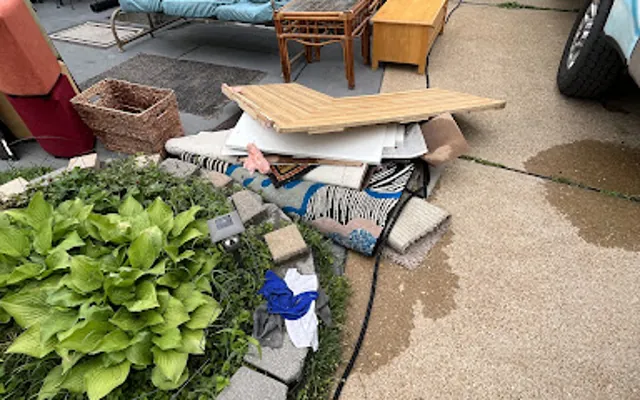
When a water main break floods a foundation in Curtis Park, CO, a local crew is en route within about an hour to start extraction and IICRC-standard drying, protecting historic interiors from lasting damage.

A Curtis Park crew arrives fast to determine if water is still entering from the break and maps how it reached the structure, checking foundation walls, cellar entries, and window wells for the intrusion points.
Technicians remove standing water from basements and foundation areas. They then use probes to find moisture hidden in baseboards, plaster, and subflooring near the home's perimeter, documenting the full extent.
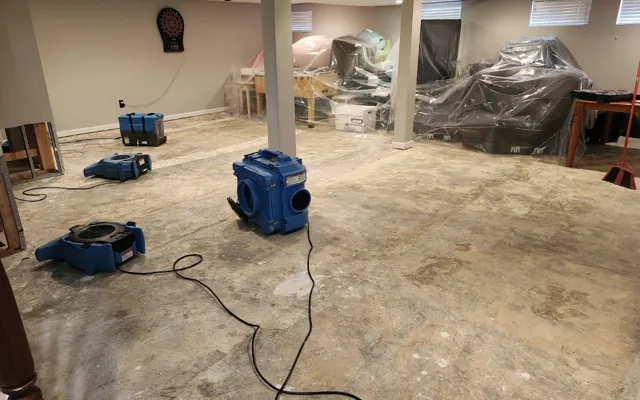
Industrial air movers and dehumidifiers are placed to dry the affected materials. The team takes daily moisture readings until the area meets a precise, documented dryness standard, protecting historic fabric.

Water main break cleanup for the interior portion of a loss typically runs from about $800 to $3,500, depending on how much water entered the home and how far it spread before the main was shut down, which is separate from any repair or replacement the water utility handles for the main itself. A minor foundation-area intrusion caught quickly sits on the low end, while a basement that took on standing water sits on the high end. Coverage for main-break water damage varies by policy and by whether the break was on public or private-side plumbing, so the loss is documented in detail to support whichever claim applies.
In Curtis Park, CO, many of Denver's oldest Victorian homes have original supply lines and foundation-level window wells, making them vulnerable when a nearby water main fails. Intruding water can quickly reach basement spaces and wick into plaster and century-old woodwork, demanding a fast, careful response to prevent structural and cosmetic loss. Aging water infrastructure beneath Denver's oldest platted neighborhood combines with original home foundations. Winter freeze-thaw cycles a mile above sea level can stress old mains, while heavy rain can push water into below-grade spaces through century-old masonry. From Curtis Park, crews also cover nearby Speer, Five Points, Cheesman Park, City Park West, Congress Park, Country Club. See every neighborhood and town on the full service area page.
See all areas servedEvery loss is photographed, measured, and logged from the first visit, so the paperwork holds up with the insurance carrier.
Technicians follow recognized IICRC drying standards and prove it with daily moisture readings on Curtis Park homes, not guesswork.
Emergency dispatch any hour of the day or night, with a real crew on the way across the metro, not a callback in the morning.
A real crew dispatched any hour, not a callback in the morning.
Trained technicians following recognized IICRC drying standards.
Truck-mounted, portable, and submersible for any size loss.
The loss is documented and billed to the carrier directly.
Coverage depends on whether the break was on the public utility side or the private property line, and the specifics of the homeowner's policy. Local crews document the entire loss in detail to support whichever insurance claim applies, as utility repair is separate from interior damage cleanup.
Drying a foundation area or basement in a Curtis Park home typically takes two to four days. The timeframe depends on how much water entered, the materials affected like old brick or plaster, and how quickly the main was shut off. Technicians verify dryness with moisture meters daily.
Crews are on call 24 hours a day and can be on the way to Curtis Park within the hour.
Call (720) 807-8315